Centenary Festival · Phase Two · Wednesday 23 September
Holism and Architecture
Moving from Isolation/Parts to Entanglement/Systems
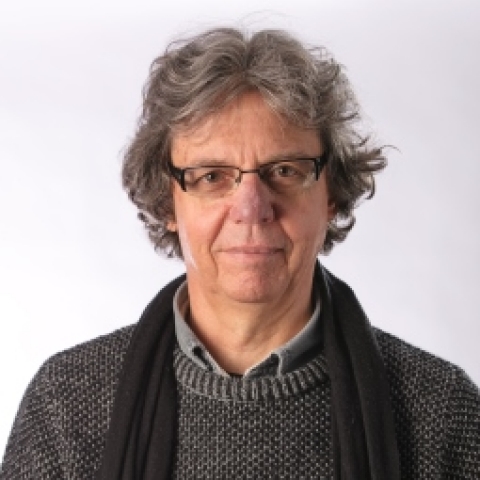
Llewellyn van Wyk · Buildings, Cities, and Infrastructure
Llewellyn van Wyk works in architecture and related design/built environment fields, and engages deeply with architectural theory, urban systems, and design practice across multiple reflections. He is also engaged in a sustained exploration of holism as a scientific and philosophical tradition -- anchored by the centenary of Smuts's Holism and Evolution -- tracing the lineage through systems theory, cybernetics, complexity science, quantum non-separability, the noosphere, urban scaling laws, and architectural implications.
Watch the recording
Recorded Wednesday 23 September, 20h00 CEST. The full transcript is available below and as a downloadable PDF.
The full session
Read the transcript
Abstract
Llewellyn van Wyk reads Jan Smuts as an early theorist of the constructed world. He opens with Ezra Pound's lines from 1912: "we have pulled down the stars to our will." They capture an age of confident technological mastery. The built environment, he argues, is now the main interface between human civilization and planetary systems. After the Second World War, the CSIR was charged with building technologies for a displaced world. Göbekli Tepe, raised by hunter-gatherers around 9600 BCE, shows building beginning as an instrument of collective meaning.
Modern construction treats buildings as isolated objects. He proposes evolving wholes instead, each building a personality with its own field of effects. The circular economy still sees buildings as recoverable parts, so recycling becomes regression. He calls for structural permanence, adaptive reuse and reversible tectonics. A wagon workshop in Philadelphia became a mill, then an art gallery and restaurant. Architects become stewards of systems, and AI can serve whole-systems judgment if we choose. Section 24 of the South African Constitution binds human rights to ecological ones. The earthen settlements of the Sahel and Seattle's Bullitt Center maintain wholes across time. NEOM's The Line is a mechanistic whole. Portland's Lloyd Crossing asks what its site was before settlement.
Holism, he concludes, asks us to build differently, so that what we make takes part in evolution. In the dialogue, Mark van Wyk asks whether homes should last a thousand years or biodegrade. The answer is flexibility and adaptability. Michael Stock raises Hundertwasser, the Māori and Christchurch, which leads to New Zealand's debate about retreat from failing coasts. Richard Cox, Jeff Blumberg, George Rzevski, Joshua Malkin and Egon Hus respond. Llewellyn van Wyk closes with the shift from the circle to the square, the Neolithic rupture we still live in.
Transcript
Welcome and introduction — Claudius van Wyk
Claudius van Wyk: Okay… So I'm going to open the space for us. And we've left the opening slide up. Llewellyn will explain what that is about. We left that up so that we don't have any glitches with getting the screen share working. It's a great pleasure to welcome us together again, in this second phase of the Holos centenary celebration of Holism and Evolution, the festival. The second phase follows our deep dive into what Holism is about in Phase 1. And quite intriguingly, right at this current moment, David Lorimer, who addressed Phase 1 on the topic of inwardness and agency, is busy presenting that to the Scientific and Medical Network, right at this moment.
And I kind of like that. I kind of like that the inwardness that he was looking at from a philosophical perspective is now being expressed at the same time as we start looking at what it looks like in the world that we inhabit, with our engagement with our lived environment. So, I find that intriguing, and that's why I'm very grateful to Llewellyn for getting up early this morning, tomorrow morning for us, to share his knowledge and insights and study into Holism with us around human habitat and the built environment, and construction, and the challenges and opportunities that we face.
Now, Llewellyn has a deep experience as an architect. Years back, when he was a little boy, he had a set of building blocks called Montini blocks, before LEGO was invented. And my dad had a new house built for us. And Llewellyn took the plans, and he actually built that house out of Montini blocks, and said, Mom's furniture's not going to fit into the bedroom. Mom had big, heavy furniture; that was the thing in the day. And so the architect actually had to go and redesign from Llewellyn's Montini block model to accommodate Mom's furniture.
Llewellyn then went on to become a partner with that same architect, in an architectural practice. He then went into the Cape Town City Council as a councillor, and ended that part of his chapter as Deputy Mayor of Cape Town. So when it comes to knowing how urban design works and the challenges of urban living, he's got deep experience in that. Then, from there, Llewellyn switched over to the whole issue of sustainable building, ecology, environment. And he became a fundamental researcher for the Council for Scientific and Industrial Research. And that's where he spent the rest of his life, actually looking at what regenerative architecture, regenerative construction, looks like.
And so it is a great honor and privilege to welcome Llewellyn to share his knowledge and insights with us around the core issue that we face, and that is our human footprint in the living ecology. And what the opportunities and challenges are, and what it might look like when we actually evolve to the deep principles of holistic consciousness, holistic thinking. So, without further ado from me, Llewellyn, welcome, and over to you.
A poem from Ezra Pound, and Smuts as a theorist of the constructed world — Llewellyn van Wyk
Llewellyn van Wyk: Thanks, Claude. Claudius. [unclear] And welcome, everybody. Hi to you all, thanks for joining. Yeah, it's a great opportunity, thank you. Apart from the chance to actually engage with everybody, the invitation also sparked, obviously, the need to investigate for myself what it's all about, and how my work can fit into that, and how that can be conveyed to an audience in that context. So, thanks also, therefore, for giving me a chance to do some exploring of the subject for myself.
I want to start with a preface. A piece of poetry, actually.
I have looked down across the city from high windows. It is then that the great buildings lose reality and take on their magical powers. They are immaterial. That is to say, one sees but the lighted windows. Squares after squares of flame, set and cut into the ether. Here is our poetry. For we have pulled down the stars to our will.
Ezra Pound had this published in a magazine called Patria Mia, a New Age magazine, in 1912. The New Age is quite curious. 1912, New Age magazine, 1912. So, at the turn of that 20th century, the human paradigm regarding the world was rooted in a belief of unbounded technological mastery and industrial dominance. Which is what Ezra is capturing here. This line from this poem catches an era of really high modernism, when humans viewed the natural universe, time, space, not as forces to obey, but as raw materials to conquer through machinery, through science, and human will.
Following World War I and World War II, Ezra Pound's relationship with industrial progress and human willpower underwent a radical and dark transformation. By the end of his life, Pound viewed the modern industrial world not as an empire built by triumphant human architects, but as, I quote, "a fragmented landscape of spiritual wasteland and broken promises." End of quote.
So, the centenary of Holism and Evolution actually invites us to reconsider Jan Smuts not only as a philosopher of wholes, but, as I will argue in this presentation, as an early theorist of the constructed world. His work, long interpreted through the lenses of biology and psychology and political organization… but I'm getting the sense that the built environment, architecture, infrastructure, human settlements, may be the domain in which his ideas find their most urgent contemporary application. And I say that because the constructed environment now is arguably the principal interface between human civilization and planetary systems. It is the space where ecological degradation, social fragmentation and technological acceleration converge. So, in that sense, to revisit Smuts at this moment is not an act of historical commemoration, but a methodological necessity.
Smuts, the CSIR and building after the Second World War — Llewellyn van Wyk
Llewellyn van Wyk: Claudius mentioned earlier my engagement with the CSIR for 17, 18 years, I can't remember. The CSIR came about because we aren't smart. And the first unit that was built, the first department that was built, was called Boutek. Building technology. So, to make this claim is not necessarily so unfounded. And it was in the aftermath of the Second World War. The world was facing this massive reconstruction. You could almost put RDP in there, of 1945. Displaced populations from Europe going everywhere, including to South Africa. And Smuts's realization that we have to find a way to accommodate these masses of people coming into the country and elsewhere. And so the CSIR was charged initially, in the beginning, with developing building technologies for a post-Second World War era. And I kind of like that, because I think that's where we're at now, in what I call a post-rupture environment.
Göbekli Tepe: building as an instrument of collective meaning — Llewellyn van Wyk
Llewellyn van Wyk: I want to understand the constructed environment holistically, not through discussing modern architecture, but, in fact, the earliest known expressions of human building. The Neolithic monumental complex at Göbekli Tepe, in southeast Turkey, offers a revealing point of departure. This was erected, we think, best guess, somewhere around 9600 BCE. Long before sedentary settlement, long before agriculture, or domestic architecture. That's different from what we were believing for a long time. We thought agriculture came first and people then settled. But it's actually not. People didn't settle and then do agriculture either. That's also not true. They remained hunter-gatherers even while they were building this.
Which is weird, because hunter-gatherers are highly mobile. So why make such an investment in something that, A, is not going to provide you shelter and security and safety? And secondly, why invest time and work in this when you're not going to stay there? So, here we see not an instrument of private comfort, no declaration of wealth or corporate power, but a civic and spiritual condenser. A constructed field that gathered dispersed human communities into shared ritual, shared identity, and shared cosmology.
Recent excavation has complicated even that reading, turning up what may be domestic structures alongside the monumental enclosures. That was thought not to be the case originally. Recent evidence is suggesting there was, which, in fact, shouldn't be surprising, because, if anything, as a Smutsian point in itself, the whole resists the clean part-based categories, shelter versus monument, that we are tempted to impose on this. Its towering, T-shaped megaliths, carved with animals and abstract symbols, constituted a spatial organism whose entire purpose was integration rather than utility.
In Smutsian terms, I would argue, Göbekli Tepe was already a whole that exceeded its parts. A site where early humans articulated their relationship to the world, and to forces they understood as larger than themselves. So, the constructed environment begins not as an extension of the individual, but as an instrument of collective meaning.
Buildings as evolving wholes — Llewellyn van Wyk
Llewellyn van Wyk: And then we have this. Now, the historical grounding matters because it reveals how far contemporary construction, how far our built environment, our constructed environment, has drifted from that original ontological purpose. The modern built environment is shaped by mechanistic logics: technical optimization, economic throughput, and disciplinary silos that treat buildings as isolated objects, rather than evolving wholes embedded within ecological and social systems. This worldview is the intellectual residue of 19th-century materialism. It is "we have pulled down the stars to our will." It's that thinking. What we see here is that thinking. Treating matter as inert, and organization as incidental.
So, as much as, I think, intervention was to invert this logic, my understanding. Organization, he argued, is creative. Wholes are not the sum of their parts, but transformations of them. When parts enter a whole, they are modified by that participation. This principle destabilizes the epistemic foundations of modern construction. To apply Holism to the constructed environment is therefore to reframe buildings and cities as evolving wholes. A building's atmosphere, its sense of place, its capacity to host human flourishing, cannot be located in any single component. These qualities are emergent properties of integration.
The building, I would suggest in Smutsian terms, is a personality. A coherent unity of structure, climate, material, social life. And its influence extending beyond its envelope: shaping microclimates, shaping movement patterns, shaping ecological flows, cultural meaning. Smuts's concept of the field then becomes architectural. Every building exerts a field of effects that binds it to the larger urban and ecological whole.
Beyond the green building movement and the circular economy — Llewellyn van Wyk
Llewellyn van Wyk: I have to interrupt here to dispel a view that the built environment is already doing that through the green building movement. That reframing exposes the philosophical inadequacy of contemporary sustainability paradigms. The circular economy, one of the big babies being touted as the latest in sustainability thinking, is often presented as a systemic alternative to linear construction. You know, linear consumption. Yet it remains fundamentally mechanistic, because it treats buildings as collections of recoverable parts, rather than as wholes whose organizational integrity is their primary value.
When a building is demolished and its buildings recycled, the higher-order whole collapses into lower-order matter. What is lost is not only embodied carbon, but cultural meaning, spatial logic, evolutionary potential. Smuts's hierarchy of wholes provides the ontological language to articulate this loss. Recycling is not circularity, but regression.
A holistic construction environment, therefore, prioritizes structural permanence, adaptive reuse, and reversible tectonics. The building's primary body must endure across generations, hosting multiple reincarnations of use, of technology and culture. Renewable materials, timber, hemp, cork, mycelium, you name them, are privileged not because they are fashionable, but because they retain biological organization. They preserve ontological continuity between the natural and the constructed worlds. When joined mechanically, rather than chemically, they allow disassembly without destroying the whole. Waste then becomes conceptually impossible, because the building participates in ecological cycles rather than resisting them.
Adaptive reuse: the old mill at Philadelphia — Llewellyn van Wyk
Llewellyn van Wyk: Now, I opened this presentation with a slide of a table full of food. And it wasn't the food so much that's the point. That building was a building that I engaged in adaptive reuse in Philadelphia, in South Africa, many, many years ago. It started its life as a repair workshop for wagons, for the local farming community. And just before the harvest, the wagons would go in for the axles to be done and fixed, and the disselboom to be repaired, whatever was needed, to be made ready for the harvest, so that there wouldn't be a breakdown. And for years and years and years, it actually did that.
Over time, the farmers started generating sufficient wheat to, in fact, grind it, and process it, and put it into bags, and sell it. And so that original building then, again, went through an adaptive reuse and became a mill. And became a very successful mill. So successful that the big wheat producer, whose name now slips my mind, but is located in the Swartland, bought them out and shut it down. And then the building went through a succession of adaptive reuses, most of them not very kind. Motor car repair shops, and junk deposits, and so on, and so on, and so on.
Until I engaged with the local artist, Pieter van der Westhuizen, who's no longer with us, about resuscitating this building, and doing something with it. And it went through its next phase of adaptive reuse. And went from a completely downtrodden building into what is now a really fine art gallery, an excellent restaurant, exhibition space, space for artists to come and work. In that photograph, you may remember, you would have seen lots of bits of machinery. All of the original memory of that period as a mill is still in that building. The restaurant wraps itself around pulleys and belts, and rods, and grinding stones and grain baskets and bins. So that at a single reading, you can almost see the history of the building in one take.
Hence the photograph. That is, I think, the argument against the circular economy, and the argument against the green building movement as such. I think we have to go beyond that.
Pedagogy, practice and the place of AI — Llewellyn van Wyk
Llewellyn van Wyk: Which then takes us, and I'm going to spend very little time on this, into: what does that mean in terms of architecture? What does it mean in terms of pedagogy? What does it mean in terms of practice? The shift from mechanistic assembly to evolutionary synthesis obviously has profound implications for pedagogy and professional identity, because contemporary architectural education remains anchored in part-based thinking. Fire safety as a coating. Thermal comfort as a machine; Le Corbusier's famous statement that a house is a machine for living in. Sustainability as an add-on. You can tick some of the boxes, all or some.
Whereas a holistic pedagogy begins with the whole. What is the site? What is the climate? What is the material ecology? What is the temporal horizon? And then treats the components as secondary expressions. Students, therefore, have to learn to design for reincarnation. To imagine buildings not as projects with terminal handovers, but as organisms with biographies. And the architect, under that circumstance, becomes a steward of systems rather than an author of objects.
Many in my environment see AI as the elephant in the room. And I want to bring artificial intelligence into this narrative, not as a technology disruption, but as a cognitive necessity. The complexity of managing buildings, let alone cities and systems of cities, as evolving wholes, tracking material biographies, simulating climate futures, coordinating ecological performance, exceeds human cognitive limits at that scale, at that level of complexity. AI provides the integrative infrastructure required for whole-life thinking. If we use it that way. It allows buildings to retain identity across time, to adapt to changing conditions, and to participate in ecological restoration.
The claim does need a caveat. AI is itself a computational pattern-matching technology. And nothing about it is inherently less mechanistic than the paradigms it is displacing. But what it offers is not necessarily organistic behaviour, but organistic-scale bookkeeping. The capacity to track and correlate more variables across a longer time horizon than an unaided design team can hold in view. Whether that capacity is used to serve a whole-systems judgment, or simply to automate part-based optimization faster, is a design choice. Not a property of the technology itself.
Professional consequences are significant. If buildings are wholes embedded within larger wholes, neighbourhoods, watersheds, biomes, then the architect's responsibility extends beyond design to stewardship. And value can no longer be measured in static assets, but in the evolutionary fitness of the system. A building that sequesters carbon, restores biodiversity, and adapts to climate non-stationarity is a higher-order whole than one that merely meets efficiency metrics. If that logic holds, remuneration will need to shift from fee-for-service to performance-based value. Though it is worth being honest that no registration or fee framework has yet been built that tests for it. And this remains a proposition rather than a description of where practice has already arrived. But essentially, the architect becomes a curator of ecological and social integrity.
Cities as biomes, and Section 24 of the Constitution — Llewellyn van Wyk
Llewellyn van Wyk: This then, I think, brings us to the core of the message. At settlement scale, Holism dissolves the boundary between natural and constructed environments. Cities become biomes. In other work, I have used the reference of the city as a forest floor. And it's the photograph. Infrastructure becomes metabolism. Buildings become organs. The settlement is no longer a human artifact imposed upon nature, but a synthetic habitat participating in planetary evolution. This is the point, I think, at which Smuts's political Holism, his belief in the unity of nations, finds its architectural analog. The constructed environment becomes the site of planetary cooperation. A space where human and ecological wholes negotiate their shared future.
Now, in South Africa, there's a curious thing. A very exciting thing. The constitutional obligation, which, regrettably, my practice and my industrial sector completely knows. The conceptual reorientation finds contemporary legal expression, believe it or believe it not, in Section 24 of the South African Constitution's Bill of Rights. Which grants every person the right to an environment that is not harmful to health or well-being, and the right to have the environment protected for present and future generations. It can be argued, and I do argue, that Section 24 is a constitutional articulation of Holism. It binds human rights to ecological rights. It binds present generations to future ones. And it binds individual well-being to systemic integrity. That recognizes that human flourishing is inseparable from the health of the larger wholes within which human life is nested.
Yet the modern constructed environment systematically violates those rights. It is a major source of pollution, generating particulate matter, toxic runoff, indoor environmental hazards. It is a dominant contributor to climate-changing emissions. Cement production alone emits more carbon dioxide than most nation states. And if treated as a country, would rank as the fourth largest emitter in the world. Construction drives nearly half of global material extraction, consuming huge quantities of timber, aggregates, metals, fossil-derived products. It produces one of the largest waste streams on the planet. And urban expansion continues to erase ecosystems, fragment habitats, seal soils, diminishing biodiversity and disrupting hydrological cycles. The built environment has become a systemic agent of harm, rather than a steward of wholes.
Four examples, and the vernacular settlements of the Sahel — Llewellyn van Wyk
Llewellyn van Wyk: So, I want to just give some examples, and then I'll wrap. The contrast between mechanistic and holistic settlement logics can be made concrete by juxtaposing four examples, which I will do. The vernacular settlements of the Sahel, which is the one up on the screen. The Bullitt Center in Seattle. The so-called Line in Saudi Arabia, all for the wrong reasons. And the Lloyd EcoDistrict, or Lloyd Crossing, as it's called, in Portland, Oregon.
The settlement in the Sahel is worth naming, even though it fits none of the formal categories above. The vernacular and informal settlement building traditions have produced the majority of the world's constructed environment, and the overwhelming majority of South Africa. These traditions were never certified by a credentialed profession, never modeled by an engineering consultancy, and never awarded 250-year design lives. Yet they routinely demonstrate a working inherited knowledge of material limits, climate adaptation, and long-run resilience that credentialed practice is now only relearning under the pressure of climate collapse.
A Holism that finds its exemplars only in a Seattle office building and the Portland eco-district, however instructive, risks looking like a philosophy for clients who can afford to build for centuries. The harder and more urgent test of Smuts's principles is whether it has anything to say to the self-built house, the informal settlement, and the vernacular tradition, where whole-systems thinking has often survived. Not because the profession protected it, but because no profession was ever there to displace it.
These environments were not designed in our modern sense. They emerged through the slow accretion of cultural memory, of ecological attunement, and collective practice. And among the most instructive are the earthen compounds of the Sahel, where communities such as the Dogon, the Kassena, and the Hausa developed settlement forms that behave as evolving wholes rather than assemblages of parts. The buildings are not objects placed upon the land, but continuations of it. Walls rise from the same earth that supports crops. Roofs are woven from fibers, harvested seasonally. Timber is used sparingly, in recognition of its ecological scarcity. The material palette is not chosen, but inherited. Shaped by climate, soil chemistry, and the rhythms of local ecosystems.
I think these structures exemplify structural permanence without rigidity. An earthen wall may last centuries if maintained. Yet it is also infinitely repairable. When erosion occurs, the community does not demolish the building; it replasters it, renewing the whole without collapsing it into matter. The building's body is therefore both durable and mutable, capable of hosting multiple generations and shifting functions. A granary becomes a dwelling. A dwelling becomes a storehouse. A storehouse becomes a ritual space. Nothing in the organization of the settlement is fixed to a single program. This is adaptive reuse in its most organic form. Reincarnation as a cultural norm, rather than a professional strategy.
The tectonic logic of these settlements is entirely reversible. Earthen walls are built through accretion, not adhesion. Timber frames are joined mechanically, using pegs and lashings and friction, rather than chemical binders. Roofs can be removed and replaced without disturbing the structural body. When a building reaches the end of its life, should it reach the end of its useful life, it does not become waste; it returns to the earth from which it came. The settlement participates in ecological cycles with a fluency that modern construction has largely forgotten. In Smutsian terms, these environments preserve wholes across time, allowing parts to evolve without destroying the integrity of the whole.
And their organizational integrity extends beyond the building envelope. Vernacular settlements are shaped by prevailing winds, by solar exposure, by hydrological flows, and by social patterns. Courtyards regulate microclimates. Narrow streets create shade and channel breezes. Building clusters form thermal masses that stabilize during normal temperature swings. The settlement behaves as a climatic organism, adjusting itself through incremental change rather than through disruptive intervention. Its field effects, social, ecological, atmospheric, are integral to its identity. Built environment is not a boundary between humans and nature, but a mediator of their relationship.
What makes these vernacular environments particularly resonant in the Smutsian framework is the refusal to treat construction as an act of separation. They do not impose geometry upon the land. They emerge from it. They do not seek novelty. They seek continuity. They do not resist ecological processes. They participate in them. In this sense, they are closer to Göbekli Tepe than to modern architecture. They are instruments of joining, expressions of collective life, and embodiments of ecological attunement. They demonstrate that Holism is not a contemporary aspiration, but an ancient practice. One that modern construction must rediscover if it is to regain its evolutionary coherence.
The Bullitt Center in Seattle — Llewellyn van Wyk
Llewellyn van Wyk: The second building is the Bullitt Center in Seattle, which is a contemporary example that approaches the stylistic ideal. Conceived not as a green building, but as a permanent ecological organism, it embodies many of the principles that a Smutsian ontology would demand of the constructed environment. Its designers rejected the logic of short-life commercial architecture, and instead pursued a building whose organizational integrity could persist across centuries. The primary structure, heavy timber columns, glulam beams, and cross-laminated assemblies, was engineered for a 250-year lifespan. This is not a symbolic gesture, but a philosophical commitment. The building's body is intended to endure, to host multiple reincarnations of use, of technology and culture, without requiring demolition. In this sense, the Bullitt Center aspires to be a higher-order whole. A structure whose coherence is preserved across generations.
It also treats waste as a conceptual impossibility. Composting toilets, greywater treatment and rainwater harvesting create a closed loop in which operational waste is eliminated. Materials were selected for their ability to be reused or returned to ecological cycles. Again, in Smutsian terms, the building does not collapse wholes into matter. It maintains wholes across time.
Finally, the building participates actively in ecological cycles. A solar canopy produces more energy than the building consumes, allowing it to behave as a net-positive organism. Its water systems mimic forest hydrology, filtering and recirculating water on site. Its materials are vetted through the Living Building Challenge Red List, ensuring that the building does not introduce toxins into human or ecological systems. In its totality, the Bullitt Center behaves less like a machine and more like a synthetic organism. An architectural whole that aligns with the evolutionary, integrative, and ecological principles of Holism.
NEOM's The Line in Saudi Arabia — Llewellyn van Wyk
Llewellyn van Wyk: By contrast, NEOM's The Line in Saudi Arabia presents itself as a civilizational revolution. A 170-kilometer linear city. Let me say that again. A 170-kilometer-long linear city. Enclosed in mirrored walls, powered by advanced technology, and framed, in its own terms, as a zero-carbon future. At first glance, it would look holistic, integrating transport, energy, services into a single, continuous megastructure. But when you examine it through a Smutsian rubric, it reveals itself as a paradigmatic, mechanistic whole.
Its organizational principle is geometric and administrative, rather than ecological. The mirrored barrier severs migratory routes and landscape continuity, imposing a hard boundary that disrupts the fields of existing ecosystems. Its density and rigidity risk locking future generations into a fixed spatial logic that resists evolutionary adaptation. Technology simulates integration, but emergence is suppressed. The settlement is designed as a turnkey product, rather than as a living organism capable of self-transformation.
Lloyd Crossing in Portland — Llewellyn van Wyk
Llewellyn van Wyk: The last example is perhaps, for me at any event, the more telling. Lloyd Crossing begins with a completely different ontological premise. Conceived as an eco-district rather than as a building, within an existing urban fabric, it treats the precinct as a nested whole within larger wholes: watershed, city, region. Its design logic is explicitly regenerative. It sets performance targets not only for energy and carbon, but for habitat restoration, stormwater management and social cohesion. Buildings are reimagined as long-life structures with adaptable interiors. Infrastructure designed to reopen hydrological and ecological flows rather than seal them. And the whole project used scenario modeling and whole-systems metrics to test its evolutionary fitness over time, asking whether the district can become more coherent, more biodiverse, and more socially integrated as it matures. In Smutsian terms, Lloyd Crossing aspires to be a higher-order whole. A settlement whose organizational integrity enriches the wholes it inhabits.
When you look at the illustrations, pre-development metrics: the question they started with is not how much can I fit onto the site, what rate of return can I expect. The question that was asked is: what was this site prior to human settlement? And what is the site now? And how much can we get the site back to what it was prior to human settlement? That's a fundamentally different way to consider city building. What was this place before it was settled? And what is it now? And how do we get it back?
So the comparison to The Line is instructive. Both projects deploy advanced technology and speak the language of sustainability. Yet one treats Holism as a visual and managerial totality, while the other, this one, treats it as an emergent ecological and temporal condition. NEOM's Line exemplifies technological Holism without ontological continuity. Lloyd Crossing attempts ecological Holism with technological support. Huge difference. The former risks becoming a monumental mechanical aggregate. The latter seeks to become a living field. And, quite curiously enough, in between preparing this and now, the NEOM project has been put on hold by the developers.
Closing: Smuts's legacy at 100 years — Llewellyn van Wyk
Llewellyn van Wyk: So, I said in the beginning that the centenary of Holism and Evolution marks not just a historical milestone, but a conceptual turning point. Smuts's philosophy arguably provides the ontological foundation for a new theory of the constructed environment. One capable of addressing climate instability, resource depletion and social fragmentation at their root. To build holistically is to recognize that the constructed world is not separate from the living world, but an extension of it. It is to design buildings and settlements that heal rather than harm, that evolve rather than decay, and that contribute to the wholes they inhabit. It is to restore the constructed environment to its original Neolithic vocation: a site where humanity participates consciously in the creative evolution of the planet.
I don't think Holism asks us to build less. I think it asks us to build differently, so that what we create participates in evolution rather than resisting it. A constructed environment, understood holistically, then becomes the site of creative integration. A place where humanity's highest capacities for synthesis, for stewardship and for imagination are expressed. To me, this is Smuts's legacy at 100 years. A philosophy capable of guiding the world into its next century. Thank you.
Opening the dialogue — Claudius van Wyk
Claudius van Wyk: Well, Llewellyn. Thank you. Thank you. It's been a great pleasure to actually look at an application in a way in which it reinforces the philosophy in the first place. So, right now, let us just sit with what we've experienced. And then put up your hand when you've got a question to ask, or an observation to express. Put up your hand.
Mark van Wyk — build to last a thousand years, or build to biodegrade?
Mark van Wyk: I can't find the hand-up button. I'd like to just jump in there. Firstly, it's so interesting. I've got my friend Cheyanne with me over here, who is an architectural technician, and we live in Plettenberg Bay, and we've just been exploring all these ideas about, you know, how do we do this? And it's quite interesting, Llewellyn, you've been a bit of an inspiration to all of us on how do we do modular buildings, how do we do, you know, more ecological buildings and stuff. But this conversation almost took it to a whole new level. I loved your idea about buildings being almost a part of the organism, rather than a thing in… And I've often thought about our waste.
What I love is, you go to Steers, and you order yourself a burger. Of course, not a meat one, I just want to make that clear.
Llewellyn van Wyk: That's true.
Mark van Wyk: And we have two options. We can get a paper box, which we can discard straight away, or perhaps there's this cool solution where we can bring a recyclable, reusable box that we can take home and reuse. And in one sense, if I bring a reusable plastic box that I use six times instead of one, does it really solve the problem? In the span of all the time that the universe has been around, I've used that box for an immeasurable point of time, but that piece of plastic will lie there forever. For your lifetime. But if I use the paper box, which seems wasteful, because I'm using forest, it's okay, in a sense, because even though it costs more energy and more water and whatnot, it's part of a greater living system. It degrades, and then you grow a new box out of trees, and then you reuse. It feels more sustainable to me, even though the energy and water use is more.
And so my question that all of this brings up for me with regards to building homes is, so interesting: do we build a home to last for a thousand years, and then multiple generations can live in that home, because it's secure, and it's solid, and it's built indestructibly, but nature can't process it? Or do we build a home out of materials that are consumable, and they degrade, but now we've got this problem that my house is busy biodegrading whilst I'm trying to live in it? And I'd love to just hear your thoughts on that really practical, painful aspect.
Llewellyn van Wyk: Yeah, Mark, I think the first thing one must do is not fall into a binary. Is it this or that? I think, if anything, what we understand by emergence and growth is that these things are incredibly fluid. They change continuously. And so, for me, the answer to the… it's not a dilemma, the answer to the question, is flexibility, adaptability. In a sense, it talks to resilience, not in the way that people generally talk to resilience. In my profession, the response to that is, we must build stronger. Resilience is resistance. But to use the analogy of the forest floor: you know, sometimes a forest gets mucked up big time by a storm. Flattened. And it regenerates itself through its own internal logic and systems. And you look at the tree, you look at the plants, you look at the interaction between them, and that's what gives you the whole. And it's a continual process of change.
Just on the side, I think one of my fascinations about climate change is how the systems are now responding to climate change by moving. It's like: this place is not cool anymore. Shift. I'm going somewhere else. So, a lot of the vineyards of the Western Cape are actually moving to Cape Agulhas, because that's not becoming kind of a nice place to grow grapes, from a grape point of view, okay?
So it's that ability to evolve, to change. And I think our buildings have to have that. You know, none of this is new, actually, Mark. There was a building movement in the 60s called the Open Building Movement. Which was like… Claudius opened with my story about LEGO blocks, and in those days it was called Montini blocks. Or Meccano sets. You've got a kit of parts, and you can do anything with it, and you can change it at any point in time. Yeah, that was my interest in modularity, by the way. When your kid is playing with a block, you don't go to Mommy and say, Mom, can you just cut this block for me, because it doesn't fit. You find a piece that fits. Right? And so it's that logic that I think one wants to focus on, rather than, is it a paper or is it a plastic? To what extent can this be adapted, reused, reconfigured? And should it reach end of life, does it go back into that circle of life, or does it become a product that's now… how do we dispense on it?
Mark van Wyk — Göbekli Tepe, property and cooperation
Mark van Wyk: Llewellyn, sorry, I have one more question, if you don't mind. Sorry, I'm so engaged by this conversation. The other one is that, and I missed a bit of the conversation, we got a little distracted earlier, but you mentioned something that, to my recollection, was that early humans, at the stage when we were choosing between whether we're hunter-gatherers or whether we are agricultural farmers… that we were exploring building structures together, but not for reasons of, you know, profits or assets, but rather as a place to connect, as Tarryn just kindly reminded me.
I mean, that's fascinating to me, especially now when we're in this capitalist society. Why do we buy property? We buy property so that we can sell it again and make a profit off it, get security out of it, or something. So that says to me that we as human beings have an innate willingness to kind of cooperate and have a space that we can meet in and do something great from. Like, I'd love it if you can elaborate on that more.
Llewellyn van Wyk: There's an anthropologist, I forget her name. A very interesting BBC series, if you want to go look at it. I'll find its name and send it to you. They did a series for BBC. I watched it on Emirates on an 18-hour flight, the whole thing from beginning to end. This anthropologist's summary of our early history was that, as a species, because we, at the time, were sharing this planet with a number of other species that didn't look necessarily very different from us… But what is that, in her view? The single element, almost, that enabled our species to survive, and by implication the other species not to survive, was our ability to cooperate. We were successful because we worked together.
And that's exactly what Göbekli Tepe was doing. A bunch of disparate hunter-gatherers getting together, like an AfrikaBurn. Right? And celebrating their cooperation, at one level. And a cosmological belief in something bigger than that place and themselves. The whole.
Michael Stock — Hundertwasser, the marae and the rebuilding of Christchurch
Claudius van Wyk: Wow. So, wow. I see your hand, Michael, and then I want to ask Richard Cox to come in. Michael?
Michael Stock: Thank you, Claudius. And Llewellyn, may I say, that was wonderful. I love architecture, and what you explained and brought was really fantastic, so thank you very much. I have two quite short questions, both related to where I believe you are, in New Zealand. The first question is about the past. I wonder if, in your experience in New Zealand, and knowing about Jan Smuts, you see any linkages with Hundertwasser? That is the first question. And also, maybe whether you see any links with the Māori and the marae, the notion of having a meeting house. So that is about the past.
And now about the future, also about New Zealand. I wonder, with your architect's eye, how you see the rebuilding of Christchurch. And the reason for asking that is I take a somewhat serious view of the coming ruptures, and the trouble which we will have finding shelter and rebuilding. And I wondered, with your architect's eye, how you look at what New Zealand has done with the reconstruction of Christchurch after the earthquake, and what it might have done. Two questions, please.
Llewellyn van Wyk: I'll deal with the last one first, Michael, simply because I don't know enough about the rebuilding to comment on it with any degree of authority. So, I'm going to park that one. I will come back to something related to it, but I can't actually talk with any degree of confidence about what they've done and not done.
On the first one, yes, I'm a huge fan of Hundertwasser. I've seen his work in New Zealand. It's a really interesting… And I must be careful what I say here, because if there's a challenge with anything that he did, I would put his work, a bit like Frank Lloyd Wright, more into the organic-influenced, rather than metabolically based. That's not to say it is invaluable. It's just to say that it's part. It's not the whole.
The Māori is more problematic. I mean, it's Indigenous, and Indigenous cultures learn to live with place. They understood that. My hesitation is for a slightly different reason. Like all vernacular societies, their response to place is admirable, quite amazing. The belief systems attached to nature are extraordinary and have survived, largely, through to current times. What is disturbing is that it became commercialized with the advent of colonials in New Zealand. And that was troubling. Because they were the sole owners of all of the forests, and were prepared to sell the wood. I'll leave it there.
The oblique reference to Christchurch, and you might be interested in this, is there is a debate in New Zealand about retreat. Because there are many places in New Zealand that are geologically unstable. Almost the entire coastline is subject to collapse. And that collapse means layers of soil literally just giving way and going into the sea. So, where previously you were 100 meters away from the sea, up on a cliff, your house is now actually, kind of, on the cliff, over the edge. And the debate currently is: do we literally retreat? Do we look at settlements in those kinds of areas and take them away? Relocate? If we do that, what happens to the land that is left? In areas where it is possible to find some kind of transition, do we do an intervention to stabilize? Like seawalls? And what does that mean?
So, because it's an island, and not a very big island, the ecological pressures of climate change are really focusing the mind about what do we do with this resource under those changing circumstances. And I think that's a healthy debate. It's a debate I'm not seeing necessarily in other places, like South Africa, for example, which is huge. Or the States, or Canada, or Russia, which is huge, because, you know, you don't think about diminishing your land surface over time, in a short period of time. So, it is a debate, I think, that is really, really fascinating.
Richard Cox — cooperation and the rigidity of modern buildings
Claudius van Wyk: Wow, yes. So, you know, Richard, Mark also referred to Llewellyn's observation that humanity actually was about collaboration. What enabled us to survive was about collaboration. You've actually researched that, in terms of our physiological development, haven't you? Just a short observation from your side. And you're muted. You're still muted. Now you're unmuted.
Richard Cox: That's better. Okay. Well, first I'd like to say that it was very inspiring to hear that. And intriguing, because you so rarely hear this endeavor to span, to connect with what's happened in the past. I think the project in Philadelphia is a wonderful example of honoring what's been happening in that space, and not just obliterating it. And I think the way that's been dealt with is just very, very fine. Overall, it was inspiring to hear of what people are striving for there. I think this whole thing of cooperation is fundamental, of course.
So, Claudius, I would have to really think carefully about what more I could contribute there, but if I'd make another observation: the Indigenous architecture… there's an element in that which is, I would say, upbuilding, and quite formative in our very psyche. And in our 20th-century buildings, well, even going back further, we are surrounded by such rigid and inflexible forms that it's always just a relief to be able to go into a space where, if I can put it like this, the soul can breathe, and is not constrained by the rigidity of so much that we find in modern buildings. So, I think that is a formative thing, and that the mode of cooperation that has done so much for humanity is not being helped by these compartmentalized, very rigid forms, which I think we're needing to move out of.
Jeff Blumberg — architecture as a holistic activity
Claudius van Wyk: Thank you for that, thank you for that, Richard. Llewellyn, I want to just pass to Jeff. Jeff, your deep investigation into Smuts's Holism, the true Smutsian view… And I'm just wondering what your response is to looking at that in terms of human footprint.
Jeff Blumberg: Am I muted?
Claudius van Wyk: You're on, you're on.
Jeff Blumberg: Firstly, Llewellyn, thank you very much. It was a very deep and profound discussion which you presented. Some of it went way over my head, I must be honest. I haven't really thought about some of the aspects that you've dealt with. So, you've given me a lot of food for thought. Claudius, I can't really give an opinion as to how Smuts would have dealt with this aspect. He didn't deal with anything on this level from an architectural point of view, and from a designing-cities point of view.
But what I'm hearing, the holistic part of what Llewellyn's talking about, is that architecture seems to be a process. It's an activity. It's a holistic activity. And when Llewellyn talks about the architecture emerging from the land, using your Sahel area: I've been to Timbuktu. And I've stood and witnessed the earth coming out of the land into these structures that are made from the earth only. It's a mud city. That is Holism in action. So, yes, you are completely right in your application; it is very holistic. That's all I can say on behalf of Smuts, Claudius: that it's certainly not a mismatch, Llewellyn's application. It is right on, it's spot on, in terms of what is holistic and what isn't. That's all I can say at this stage.
Claudius van Wyk: Thank you, Jeff. Thank you for that.
George Rzevski — solitude, community and AI as a partner
Claudius van Wyk: I want to quickly just jump to George. George Rzevski. George, you presented on the potential of technology, coevolution with technology, and particularly on AI, and Llewellyn spoke about the role, the potential role, of AI. Have you got some observation on that?
George Rzevski: Wow. Extremely interesting. I'm, by training, engineer, and I held, for a long time, chair in engineering design, but I insisted on having in my department architects and designers, furniture designers, fashion designers, in order that we can learn from each other. And our design philosophy was very much in line with yours, what you said. But what we have found is that different people can produce exceptional intellectual work under different conditions. And insisting on communities and collectives is okay. But I know by myself, the best scientific work I have produced in isolation, in this very room in which I am now, when I isolate myself from colleagues. This idea, how to build an environment in which people can isolate themselves, and join into a community when they feel like it, is what we couldn't solve. Have you got an idea how to do it?
Llewellyn van Wyk: Me? I don't think… again, it's not an either-or. This idea that you're either together or you're on your own. I think these things are a lot more fluid, a lot more flexible. And certainly, I think our approach needs to be, at all times, to enable whatever interchange is being sought to take place. What that is, I don't know. I'm not going to dictate. But can one create… the Philadelphia mill does that. Can you create a facility, a space, in which any kind of level of engagement, from an individual wanting just to sit there and smoke his pipe and have a cup of coffee and read the paper, to a wedding event for 500 people? Does what you create enable multiple levels of engagement?
George Rzevski: Yeah. And to answer now what Claudius suggested: in a later life, when I retired from that chair, I spent time designing AI systems. And I always thought that they are extremely useful to my clients if they are doing operational stuff for them, releasing them from chores, and enable them to spend time elsewhere. So, in that sense, I was very impressed with your slide, which I understood implies the same. But… a possibility to have an AI as a colleague, as a discussion… kind of member of a team, because what AI has is the ability to go rapidly to an enormous number of options. And so, when you start a conversation, it will immediately pick up various options that I never managed to catch up with, because the speed and the thoroughness by which AI can identify options in any situation is remarkable. So, the interesting possibility of having average-intelligence AI doing all your operational stuff, all your scheduling, all your… an interesting, but essential, administration. And having a different kind of AI as a partner.
And I'm amazed with the current discussions, at least in the UK, where I am, about stopping AI, dangers of overpowering humans. For God's sake, our brains, with a hundred billion neurons and five senses, are so much superior to any AI. As a designer of AI systems, I am absolutely convinced that you can never make a digital circuitry overpower the biological marvel of our brains, with so many emergent properties. So, here it is. I'm a bit unpopular, because I keep trying to explain to people how useful AI could be as a sort of… doing essential stuff, which we don't like doing, and as a partner in your creative endeavor. I was told to just… because that's not popular.
Llewellyn van Wyk — from the circle to the square, and the Neolithic rupture
Claudius van Wyk: Thank you, George. So, Mark, I don't know if you have a final observation, and then we're going to hand over to Joshua. Not Mark, Llewellyn, sorry.
Llewellyn van Wyk: Yeah, maybe a question back to you guys, to your group. Göbekli Tepe has got an interesting follow-on period. Not the site itself, but the people. And it's a source of real fascination to me: the shift from the circular to the square. Archaeologists talk about discovering the corner. And architecturally, that's interesting. Is there a particular symbolic value in that circle? Because it's a recurring motif across multiple Indigenous societies. Or is it simply the constraint of a material that you use, that lands up in that form because that's how it achieves its structural stability?
But that shift from the circle to the square corresponds in time to harvesting and to surplus. And the current thinking, I'm not convinced about, but the current thinking is that the square offered greater storage opportunities than the circle. You didn't get resilient spaces, because you had to stack in a particular way. And it's the collection of surplus that switches this from the collective to the individual. The Neolithic rupture. Our first known rupture is that switch from the collective to the individual. And suddenly, because of surplus, you get stratification in society. I've got more than you. I'm more important than you. And then the built environment responds. Those articles get bigger, and fancier, and have more to display wealth, than those that don't have.
And it's the single, almost singular moment, I'm compressing singular now, way beyond geological time, where the switch happens, and I'm not sure why. And we are still in that paradigm. We are still operating, I call it an operating system. We are still in the post-Neolithic operating system. For all of our ability to explore Mars with a rover and send pictures back, we are still in a Neolithic operating system.
Claudius van Wyk: Wow. Thank you, thank you. Joshua.
Joshua Malkin — a holistic city-centre development
Joshua Malkin: Well, just to say hello, Llew. I can't tell you how much I enjoyed that. As someone who, at too early a stage in my maturity, found myself as director of a 25-acre city centre, 200 million pound development, I tried my best at that time to create a holistic perspective for the strategy, by creating multiple perspectives for the design to influence the development, from a community perspective and a geographical perspective. We undertook huge amounts of… capability on board, different kinds of skills, unusual professionals, cultural analysts. We had a cultural analysis of the geography. This was a city which should have had a river in it, but did not. And we tried to create our design around the missing lake, in respect to it being a central area of the watershed, which was a natural area for wool and textiles. And we had a community visioning process around multiple perspectives of different people's experience and needs. And my job was to integrate the interests of the community with those of the funding. It was not an easy job, as you can imagine.
And what I found in your talk was an extension of the ideas that were going around at the time that we were discussing, in a very animated way, about how we could make our urban regeneration model a contextual success and a community success, as well as being financially viable. That was an incredible experience for me. And my conclusion, in trying to link it with a little bit of what you were saying, is: I think until we can create a different… well, as you say, move out of this Neolithic culture to a collaborative culture, and, interestingly, that Mark and Claudius and I are involved in, looking at a new kind of co-operating system, it's going to be very difficult. Until we can reach what Marcus, in his talk, spoke about: patterns, or institutions, which leave more life behind than they extract. And we reach a kind of mycelial culture, or consciousness, or mycelial economy.
I've no idea how we get there, but at some point we're going to be forced to make the leap, and hopefully we can be ready with some of the ideas that you shared with us, which were inspiring. So I'd just like to thank you so much for your contribution, and it's so wonderful to hear a facet of Holism that covers what most people experience in their daily lives in cities, and how we might be able to re-envision that. So thank you again, and I'll pass over to… who am I passing over to, Claudius? Oh, Egon!
Egon Hus — a room repurposed, and the next speaker
Egon Hus: Thank you, Joshua. Yes, well, thank you, Llewellyn. You've just made me realize that the space that I'm currently sitting in, which is now, I would call it, my home office in Italy… we've converted this place, I think, about 10 years ago, but before that, the previous owner, it was his tool shed, and he used it as a place to convert grapes into wine, not unimportant. And the owners before that used it as a stable, so in this space cows used to stand. This has been repurposed at least two times, to my knowledge, and I was just thinking, probably my sons will turn it into a cinema, I think, or a darts area. I don't know, but it will definitely be repurposed.
Yeah, and I think my job that I'm doing now is that Claudius had asked me to introduce the next speaker, on the centennial that we are celebrating together, and which we are in the second phase of. And our next speaker is Jeremy Lent. You might know him; he's an author and integrator. He has written the book The Patterning Instinct, that was, I think, his first big work. And after that, he published The Web of Meaning. And recently, earlier this year, he published Ecocivilization: Making a World that Works for All. It's quite a book, I can tell you. And I would say read it if you want to spend less time asking yourself, how do we stop things getting worse, and more time exploring what could a genuinely different civilization look like, and how might we get there.
Now, this event is planned for Friday the 16th of October at 1800 CET. And the topic that Jeremy will be addressing, of course, following his recent publication, is: what would a truly holistic civilization actually look like? Can we envision an ecocivilization for a regenerated Earth? And now, I think that really fits beautifully, like also yours, Llewellyn, today, into the final stage of our Phase 2, the liminal space of the Holism and Evolution centenary celebration of Jan Smuts's 1926 work. Because that's why we are all here together; that's what we talk about. And I would love to invite you all to that, and I'll hand back over to Claudius to close, I think, for today.
Closing — Claudius van Wyk
Claudius van Wyk: Thank you so much. Thank you so much. Yes, so we have presentations through until December, and some of the presenters are here, including Indigenous wisdom, including what human evolution might look like, and so you're so welcome. So, Llewellyn, yes, thank you. Deeply appreciated. Loved the deep research into what Smutsian thinking was about. Thank you, everybody. Thank you for being here.
© 2026 Claudius van Wyk. All rights reserved.