Centenary Festival · Phase Two · Wednesday 22 July
Extraction to Regeneration
Rethinking the Future of Food Systems as Living Networks
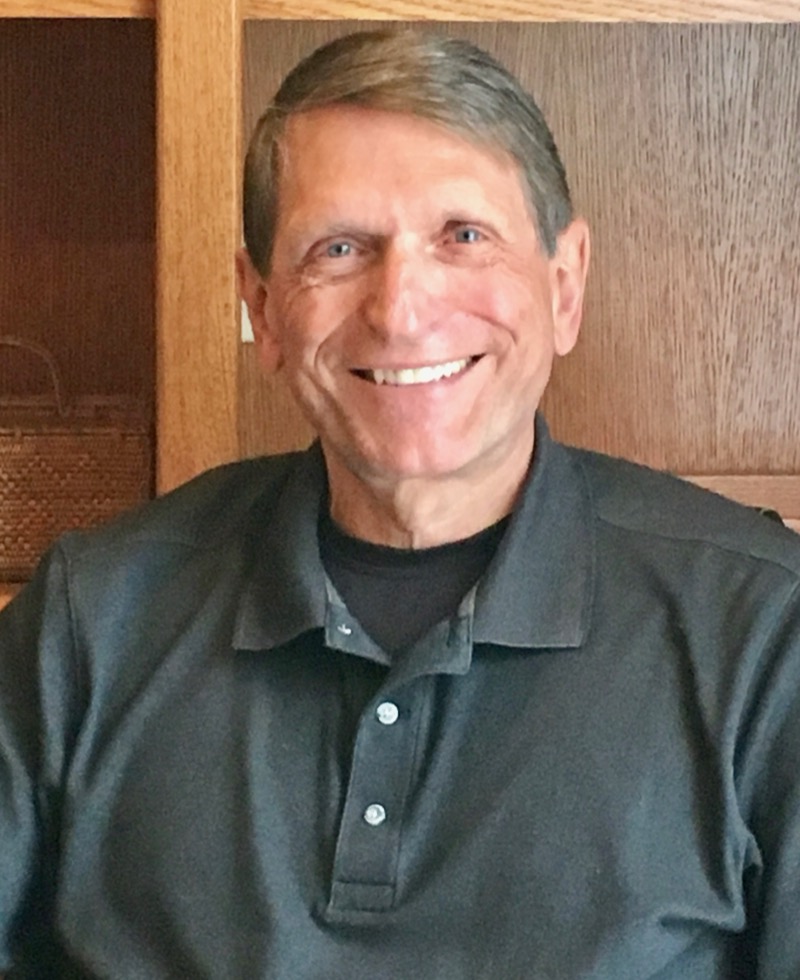
Klaus Mager · Global Food Systems
Klaus Mager is an international food-systems leader spanning global food service, hospitality, wholesale, and supply-chain innovation. With practical understanding of food systems operating from farm to fork, he founded Food with Thought AI. He helps farmers, supply-chain partners, and food-system leaders co-design regenerative transitions to improve soil health, restore water cycles, support carbon outcomes, and strengthen livelihoods. For Klaus food and agriculture sit at the heart of climate resilience, public health, supply-chain security, and rural prosperity.
Watch the recording
Recorded Wednesday 22 July, 19h00 CEST. The full transcript is available below and as a downloadable PDF.
The full session
Read the transcript
Abstract
Klaus Mager brings Phase Two from water to food. Speaking from a lifetime inside the system — classically trained chef in Germany, twenty-one years at Disney ending as a director of food and beverage, then global head of target-group marketing at METRO across some thirty countries — he argues that the modern food system's crisis is not a failure of farming knowledge. It is a failure to organise markets, finance and institutions around the living conditions on which food production depends. The farmer is not the bottleneck. The bottleneck is the system of incentives, institutions and relationships around the farmer.
The talk moves in a single arc. It begins with fragmentation: every part of the food chain optimised by its own narrow measure — yield, shelf life, throughput, price — until the parts appear successful while the whole grows fragile, and the costs left "outside the price" are transferred to farmers, communities and the public. It then reaches for history, from Mesopotamian salinisation and the Classic Maya to the American Dust Bowl, and for the counter-history of Japan's satoyama landscapes, Mediterranean terraces and the Three Sisters — cuisine as ecological memory, a culture's record of how to inhabit a place.
At its centre is soil as a living system rather than an inert growing medium, and the Haber–Bosch bargain that let us manufacture fertility elsewhere and ship it in. Mager is careful: this was not a bad technology displacing a good one, but a rational response to hunger — and roughly half the world's population is alive because of it. The problem is that one pathway became too dominant. He traces the reinforcing loop by which simplification weakens soil biology, which weakens water infiltration, which drives further intervention, until ecological fragility becomes economic fragility. The 2026 Strait of Hormuz disruption is his illustration that fertiliser is not a farm input but strategic infrastructure.
He then names the barrier honestly: the transition valley. On one side sits a fragile but fully institutionalised system that lenders, insurers, processors and policy are already organised around; on the other, a more resilient farm; and between them a period of added cost and uncertainty that the farmer alone is asked to carry, while most of the benefits are public. His proposal is a three-part bridge — dependable institutional demand as an anchor, shared price and transition risk including payments for ecosystem services, and the missing middle of aggregation, processing, storage and logistics — with carefully governed AI as a tool for building and operating it, not as the bridge itself. He closes on the need for a policy compass rather than a blueprint (contrasting 155 essentially random measures in the Senate's Farm Bill proposal), on the warning that precision is not purpose, and on the image of rain falling on two fields: the same rain, and only one of them able to receive it.
A substantial discussion follows on scale and governance, with Marc Pierson (Ashby's Law, Ostrom's polycentric governance, and the smallest scale at which something significant can be done), Mark van Wyk (where to start, and a friend thirty-five years into regenerative agriculture still struggling to pay rent), Egon Hus and Prof Glen T. Martin (bioregions versus nation-states, and the case for democratic world law), Michael Stock (the EU's Common Agricultural Policy, and the University of Exeter's carrying-capacity scenarios), and Joshua Malkin (an asset-based political economy).
Transcript
Introduction — Claudius van Wyk
Claudius van Wyk: Good evening, everybody. Welcome. It is so great to see you.
It is such a privilege to invite Klaus to address us tonight. We've had an interesting second iteration of the Festival of Holism and Evolution — which we're calling the liminal space. A space for imagining new futures, new ways of being.
In the first part of the festival we were looking at the deeper dimensions of holism that were not understood. And in looking at how holism looks in the world, we thought it would be a good idea to start with Glen, whose whole focus is on a new system of governance — holistic governance. From there we went to Dr Anthony Turton, who looked at the critical issue of our water. And then I did a little research and found that, in respect of the greatest impact on this era called the Anthropocene — where our human footprint has been most impactful on the planet — our food system is the biggest impact.
And so nobody better than Klaus Mager. Klaus has been in the food system. He knows it from the inside and the outside. He's a food-systems lead, and he's going to be looking at how we create regenerative transitions — how we can take all the aspects of the food system and make them regenerative rather than extractive. Klaus leads the Food with Thought initiative. And the intriguing part of his work is how he is using artificial intelligence to help the various sectors in the food system, from the soil to the plate, to become more generative.
So, Klaus, without much more ado from me, we look forward to your presentation and to a good, generative conversation afterwards. Welcome.
The talk — Klaus Mager
[The session opened with a power outage at the speaker's location, caused by wildfires bringing down local power lines. Klaus lost his multi-screen setup and his speaker notes; Egon Hus took over as host and advanced the slides on his behalf for the whole presentation.]
Klaus Mager: Wow, all right — that was exciting. Well, thank you for inviting me.
I'm Klaus Mager. I've spent most of my working life inside the food system. I began as a classically trained chef in Germany. I spent twenty-one years with Disney, eventually serving as a director of food and beverage — and there I encountered food at a very different scale: complex operations, global supply chains, demanding quality standards, and the daily challenge of feeding large numbers of people reliably.
Later I joined METRO, one of the world's largest food wholesalers, based in Europe, as global head of target-group marketing across a business operating in some thirty countries. That experience gave me a wide view of how farmers, processors, distributors, retailers, restaurants and consumers are connected — and how decisions made in one part of the system create consequences somewhere else.
Since retiring from corporate life, I've found myself increasingly working at the intersection of food, agriculture, climate change and environmental decline. More recently I founded Food with Thought AI, an initiative exploring how artificial intelligence might support a regenerative transition — not simply by improving individual farming practices, but by helping us understand and coordinate the food system as a whole.
That brings me directly to the spirit of this gathering, and to the work of Jan Smuts.
The whole before the parts
Holism asks us to see that the parts cannot be fully understood in isolation from the whole. A farm cannot be separated from its watershed, its soil, its market, or its community. Humanity cannot be separated from nature. We are not standing outside the living world, managing it from a distance. We are embedded within it, dependent upon it, and participating in it.
That recognition — moving beyond the illusion of separation — is the starting point for what I'd like to explore with you today.
When we speak about the food system, we usually describe a sequence: farming, processing, distribution, retail, consumption. But that is an incomplete picture.
A food system is a living network, connecting soil organisms, plants, animals, water and climate with farmers, workers, businesses, governments and communities. It is a civilisation's relationship with the living world, made visible three times a day. Every meal carries the condition of the soil in which it began, the water used to grow it, the energy required to process and move it, the labour of those who produced it, and the economic rules that determined what was grown.
Holism asks us to see that whole before optimising its parts. Modern food systems largely did the opposite.
Plant breeders optimised for yield and uniformity. Farmers were pushed to maximise production. Processors optimised shelf life. Distributors, speed and volume. Retailers, availability and price. And these achievements were real. They fed a growing population, reduced seasonal scarcity, and made a wide range of foods available.
But each part was judged by its own narrow measure of success. A crop could deliver record yields while the soil lost organic matter. A supply chain could lower prices while the farmer received a smaller share. A product could remain saleable for a month while offering little nourishment. A region could increase output while its rivers filled with nutrients and chemicals. The parts appeared successful even as the system grew more fragile.
This is fragmentation made physical. Soil became an agricultural issue. Water became an environmental issue. Farmer viability became an economic issue. Nutrition became a public health issue. Climate became an emissions issue. Biodiversity became a conservation issue.
But in the living world, these were never separate. Soil structure determines whether rain enters the ground or runs across it — shaping erosion, water quality, groundwater recharge and drought resilience. Plant diversity above ground influences biological diversity below it, affecting nutrient cycling, plant health, and the need for external inputs. Food prices shape what farmers can afford to do; markets shape the crops farmers grow; and those crops shape the landscape. The relationships remain connected, whether institutions recognise them or not.
And when we separate them, the costs do not disappear. They are transferred — to farmers, through declining soil; to communities, through polluted water; and to the public, through health systems, disaster relief and ecosystem repair. We call these externalities: costs left outside the transaction. But they are not outside the system. They are only outside the price.
This creates the central contradiction of the transition. We ask farmers to protect water, rebuild soil, support biodiversity, store carbon, grow nutritious food and sustain rural communities. But markets pay them for something much narrower: a standardised commodity, delivered at a competitive price. A farmer who invests in cover crops, longer rotations, habitat or more careful grazing may create value for the whole landscape — yet little of that value returns to the farm. Meanwhile, debt, labour costs, equipment payments and buyer requirements remain.
The food system crisis is therefore not primarily a failure of farming knowledge. It is a failure to organise markets, finance and institutions around the living conditions on which food production depends. The farmer is not the bottleneck. The bottleneck is the system of incentives, institutions and relationships around the farmer.
What history shows
The fracture I have described is not unique to the modern food system. History repeatedly shows that societies become vulnerable when they weaken the ecological foundations that sustain them. Soil loses fertility. Forests retreat. Irrigation systems accumulate salt. Water becomes scarce or unreliable. Agricultural production becomes less able to absorb drought, flood or political disruption.
Ancient Mesopotamia offers one example. Irrigation along the Tigris and the Euphrates made cities and highly productive agriculture possible in an arid landscape. But where drainage was insufficient, evaporation left salts behind. Over time, some areas became less suitable for core crops.
Among the Classic Maya, prolonged drought, pressure on forests and soils, population demands, warfare and political instability appear to have reinforced one another. Some city-states lost population and authority, while others adapted or continued.
The American Dust Bowl reveals the same pattern in modern form. Severe drought struck the Great Plains after large areas of native grassland had been ploughed. With the vegetation and root systems that once held the soil gone, wind lifted exposed topsoil into enormous dust storms. Climate variability, farming practice, land policy and economic pressure combined to create a disaster that no single factor explains.
Across these different histories, ecological degradation reduced a society's room to manoeuvre. A drought that might once have been manageable became a crisis. A harvest failure became migration, conflict, or political instability.
The difference today is scale. The food economy is globally interconnected. A relatively small number of producing regions supply international commodity markets. Fertiliser, animal feed, energy, finance and shipping connect farms thousands of miles apart. At the same time, many regions are experiencing soil degradation, water stress and climate disruption together.
History does not tell us that collapse is inevitable. It tells us that adaptive capacity depends on recognising these relationships before ecological decline removes our choices.
Cuisine as ecological memory
History is not only a record of ecological failure. Across the world, many cultures developed food systems that kept feedback from the land visible. People could see when water was becoming scarce, when a hillside was losing soil, when grazing pressure was too high, or when fertility needed to be restored. Their response was not based on the modern language of sustainability. It was based on necessity, observation and accumulated experience.
Mixed farming, rotations, terraces, water harvesting, composting, managed grazing, and the integration of crops and livestock kept nutrients in circulation, spread risk, and maintained the productive capacity of place.
These cultures also did not separate agriculture from cuisine. Cuisine became a form of ecological memory — a living record of what a landscape could reliably produce, in which season, and in what combination.
Japan's traditional satoyama landscapes illustrate this: forests, rice fields, grasslands, irrigation ponds and coastal waters, with farming and fishing managed as connected systems.
In the Mediterranean, another form of intelligence evolved around dry summers, variable rainfall and thin or sloping soils. Terraces, dry-stone walls, mixed crops, grazing and water channels slowed runoff and protected land. Grains, legumes, vegetables, olive oil, fruit, cheese, cured foods and preserved vegetables turned seasonal abundance into nourishment through periods of scarcity. Much of what we admire as Mediterranean cuisine is a history of communities learning to create pleasure from ecological limits.
The Three Sisters — maize, beans and squash — offer a different example. The maize gave the beans support. The beans contributed biologically fixed nitrogen. The squash covered the soil, retaining moisture and suppressing competing plants. The ecological relationship became a culinary relationship as well: complementary in the field, and complementary on the plate in Mexican cuisine.
The point is not that earlier cultures lived in perfect balance with nature. They did not. What matters are the design principles embedded within them. They worked with diversity rather than uniformity. They recycled nutrients. They adapted to water and terrain. They connected production with seasonality. And they preserved knowledge through food, ritual and shared practice.
Cuisine, viewed this way, is more than taste or identity. It is a culture's memory of how to inhabit a place. The task is not to return nostalgically to an earlier world. It is to recover the sensitivity to ecological feedback, and combine it with modern science, technology and social expectations.
Soil is not dirt
To understand why regeneration must begin in place, we first have to change how we see soil.
For much of the industrial era, soil has been treated as an inert growing medium — something that holds plants upright while nutrients, water and protection are supplied from outside. But soil is not dirt. Soil is a living system.
In healthy soil, minerals, organic matter, water, air, roots and organisms continually interact. Bacteria and fungi decompose organic material and release nutrients. Roots feed microbial communities. Fungal networks extend their reach. Insects and other organisms create channels and move material. Together, these relationships create soil structure and function.
When rain falls on well-structured soil, much of it moves downward rather than across the surface. Some becomes available to plants. Some travels slowly through the landscape, recharging groundwater and sustaining streams. When soil structure is damaged, the same rain behaves differently. The surface seals or compacts. Water runs off, carrying soil, nutrients and chemicals into waterways. Rain that should replenish the land becomes an erosion event.
So soil health, water security and climate resilience are not separate concerns. They are expressions of the same relationship.
Living soil also changes the meaning of fertility. Fertility is not simply a stock of chemicals. It is the soil's capacity to cycle nutrients, store carbon, receive water, and sustain the biological relationships through which plants obtain what they need. The question is therefore not only what does the crop require this season? It is also: what is happening to the soil's capacity to function over the next ten, fifty, or hundred years?
Every soil answers differently. Soils are shaped by geology, climate, vegetation, topography, water management and time. Even neighbouring fields may differ in history, compaction, organic matter, infiltration and recovery potential.
This is why regeneration cannot be reduced to a universal checklist. Cover crops may help — but which species, under what rainfall, with what machinery, and within which market rotation? Reduced tillage may protect one soil, while another requires carefully managed disturbance. Livestock can cycle nutrients and stimulate growth, but poorly timed grazing can have the opposite effect. The practice alone is not regenerative. Its effect depends on how it interacts with the whole system.
This leads towards bioregional thinking. A bioregion is a landscape shaped by shared soils, water flows, climate, ecosystems and human communities — not merely an administrative boundary. Thinking bioregionally means asking how a farm participates in the larger living system. Where does its water come from? Where does it go? Which crops, animals and trees fit the climate? What processing, markets, cuisine and knowledge exist nearby?
Regeneration begins with a grounded question: what does this place need to become more alive, resilient, and capable of nourishing its community over time?
The Haber–Bosch bargain
If living soil is where regeneration begins, it is also what the modern food system learned to replace from the outside. To understand the transition ahead, we need to understand the bargain we are leaving behind.
Nitrogen is essential to plant growth. Although the atmosphere is nearly 80% nitrogen, most plants cannot use it directly. For most of agricultural history, usable nitrogen circulated through local biological cycles: legumes, manure, compost, crop residues, and soil organisms.
In the early 20th century, Fritz Haber found a way to combine atmospheric nitrogen with hydrogen to produce ammonia. Carl Bosch then developed the engineering process to manufacture it continuously at industrial scale. Haber solved the chemistry; Bosch solved the scaling.
The consequences were extraordinary. Farmers were no longer limited to nitrogen recycled locally or fixed biologically. Fertility could be manufactured elsewhere, transported, and applied in concentrated form. Combined with irrigation, mechanisation, plant breeding and crop protection, synthetic fertiliser greatly increased cereal yields, supported population growth, and reduced pressure to cultivate more land.
This was not a bad technology displacing a good one. It was a rational response to hunger, scarcity and unreliable harvests. Humanity became deeply dependent on its success.
But every bargain has terms. Synthetic nitrogen made farms less dependent on local nutrient cycles: lost nutrients could simply be replaced from outside. This enabled specialisation — large landscapes planted to one crop, livestock separated from crop production, and nutrients concentrated as waste rather than returned as fertility. The circular metabolism of the farm became increasingly linear. Natural gas and minerals entered at one end, standardised commodities left at the other, and excess nutrients escaped into water and the atmosphere.
At the same time, yield became the dominant measure of success. Yield matters — a system that does not produce enough food cannot succeed. But yield measures output, not the condition of the system producing it. A field can deliver high yields while losing organic matter. It can remain profitable while becoming less able to absorb water, and more dependent on fertiliser, irrigation, pesticides, borrowed capital and favourable weather.
As yield became the organising number, breeding, machinery, storage, insurance, commodity markets and procurement all adapted around large volumes of uniform product. Uniformity lowered costs and moved food efficiently — but biological systems do not necessarily thrive on uniformity. Large areas of one crop favour particular pests and diseases. Short rotations remove ecological breaks. Chemical control may work until weeds, insects or pathogens adapt, requiring another intervention.
This is not a criticism of farmers. They operate within markets that reward predictable yields and punish failure immediately. The economic model rewards control, because the crop must be protected this season.
The technology was not the mistake. The mistake was allowing yield to become the definition of success. The question is whether we can retain the contribution of industrial nitrogen and the modern economy to food security while reducing the dependency, pollution and ecological simplification that developed around them.
The reinforcing loop
The problem is not one chemical, machine or practice. It is the reinforcing loop that forms when several individually rational decisions begin to weaken the land's biological capacity.
A reinforcing loop feeds on itself: one change creates conditions that encourage more of the same. In agriculture, the loop often begins with simplification. Rotations shorten. Livestock and crops are separated. Fields remain bare longer. Soil is disturbed repeatedly. Nutrients are applied mainly in soluble form, while pests and weeds are managed primarily through petrochemical control.
Each decision may make sense in isolation. Together, they reduce diversity above and below ground.
Plants are the main source of energy entering the soil ecosystem. Through photosynthesis they convert sunlight into carbon compounds, some of which move through roots into the soil and feed bacteria, fungi and other organisms. When living roots are present for only part of the year, that energy flow becomes intermittent. When crop diversity declines, so does the variety of compounds entering the soil. Repeated disturbance can break aggregates, disrupt fungal networks, and accelerate the loss of organic matter. Fertilisers and pesticides may alter biological communities when product, rate or timing is poorly matched to the system.
This does not mean every application destroys soil biology. The effect depends on context. The important point is cumulative.
And here Smuts' insight becomes concrete. Soil function emerges from relationships among organisms, roots, minerals, water and management. It cannot be located in any one component, because it belongs to the functioning whole.
When biological diversity, living roots, organic matter and protective cover decline together, soil structure weakens. The surface may crust; compacted layers form. And rain that once entered the ground now evaporates or runs downhill, carrying soil and nutrients with it. The farm has not merely lost water. It has lost fertility and future productive capacity. Downstream, the same event contributes to sedimentation, pollution and flooding. The field problem becomes a watershed problem.
The remaining soil also holds less plant-available water. A field may receive the same annual rainfall, yet suffer greater drought stress because less water enters and remains. During dry periods, crops run out sooner. During heavy rain, the land is less able to absorb it. The system becomes vulnerable at both extremes.
That vulnerability drives another round of intervention: more irrigation, more fertiliser, more crop protection, more financial risk management. The farm becomes more dependent on purchased inputs precisely because its internal capacity to regulate itself has weakened. Ecological fragility becomes economic fragility. And with debt and contracts, experimentation becomes harder still. The safest choice this season may be the familiar crop and another input. That decision is rational — but repeated across the system, it deepens long-term dependency.
The issue is not that external inputs are always wrong. They may be necessary, especially during transition. The deeper question is whether an intervention restores the system's capacity to function, or substitutes for that capacity indefinitely. A regenerative system is not one in which human intervention disappears. It is one in which intervention increasingly supports the land's own capacity to organise, recover and remain productive.
Fertiliser is strategic infrastructure
The loop often remains hidden while the inputs continue to arrive. A farmer orders fertiliser, the dealer delivers it, the crop is planted. From the field, the system may appear local.
But the nitrogen applied in that field may depend on natural gas extracted in another country, ammonia manufactured in a handful of large industrial facilities, ships passing through a narrow maritime corridor, and a network of international finance, insurance and distribution spanning several continents.
The 2026 disruption around the Strait of Hormuz made that architecture visible. Under normal conditions, that trade carries between 20% and 30% of globally traded fertiliser, along with major energy flows. When passage became uncertain, shipping delays, insurance costs, interrupted gas supplies and market anxiety affected prices far beyond the Gulf. A farmer thousands of miles away may pay more even if their fertiliser never passes through Hormuz, because local prices are connected to a global market.
This reveals that fertiliser is not merely another farm input. It is strategic infrastructure for modern food security.
A widely cited 2008 study estimated that synthetic nitrogen produced through the Haber–Bosch process was responsible for feeding about 48% of the world's population at that time. Let's sit with that statistic for a moment. What it is saying is that one half of today's global population could not be alive were it not for the input of petrochemicals into our production process. The precise percentage changes with population, diets and agricultural practice, but the conclusion remains: modern civilisation is profoundly dependent on industrial nitrogen fixation.
That dependency operates at several levels. We depend on the chemistry that converts atmospheric nitrogen into ammonia. On large amounts of energy. On a concentrated network of production facilities. On shipping routes, ports, finance and political stability. And on farmers being able to purchase fertiliser at a price that still allows them to grow crops profitably.
A shock at the beginning of the chain travels through the whole system. Conflict affects shipping. Shipping affects fertiliser availability and price. Fertiliser prices affect planting decisions and farm finances. Those decisions affect yields, commodity markets, and eventually the cost and availability of food.
The lesson is not that we can simply stop using synthetic nitrogen. Abrupt removal, before rebuilding biological fertility and redesigning production, would create enormous food-security risks. Nor is fertiliser itself the enemy. The lesson is that one pathway has become too dominant. Resilience means rebuilding options: using nitrogen more efficiently, recovering nutrients from waste streams, bringing legumes and diverse rotations back into farming systems, strengthening soil biology, and expanding lower-carbon fertiliser production where appropriate. The objective is not the abrupt removal of an input. It is the reduction of dangerous dependency.
The transition valley
Recognising the fragility is one thing. Giving farmers the economic freedom to move away from it is another.
Farmers are often told that the regenerative transition is mainly a question of awareness or willingness. But the main barrier is usually not attitude. It is the economic system in which the farm must survive.
A farmer rarely has the freedom to redesign from first principles. Equipment, contracts, insurance, labour and existing buyers all narrow the available choices. Lenders may expect familiar rotations. Processors and elevators may accept only a limited range of commodities.
Government policy reinforces this structure. Farm bills, crop insurance, commodity supports, research and infrastructure have largely been built around major crops and established production systems. They reduce risk inside the industrial model, while offering less protection for diversified rotations, unfamiliar crops, and regenerative transition. This is not simply a free market favouring the status quo. Public policy has helped determine which risks are protected, which crops have markets, and which systems appear economically viable.
Transition requires new knowledge and new management, and sometimes new equipment. Costs may rise. Labour may increase. Yields may become less predictable. Diverse rotations may include crops without dependable buyers. And many benefits — better soil structure, lower input dependency, improved water retention — take years to develop.
This creates the transition valley.
On one side is the existing system. It may be ecologically fragile, but lenders, insurers, advisors, processors, government programmes and commodity markets are already organised around it. On the other side is a potentially more resilient farm, with healthier soil, better water retention, and lower dependency on purchased inputs. Between them lies a period of added cost, uncertainty and risk. The farmer may not know how long it will last, whether yields will hold, or whether anyone will buy the crops needed to make the new system work.
This is where dominant markets become a trap. Commodity markets pay mainly for volume, uniformity and delivery. They rarely distinguish between a crop grown while rebuilding soil and one grown while depleting it. The farmer carries the transition cost, while markets and policy continue to support the system being left behind.
Many benefits also fall outside the farm's financial statement. Better water infiltration can reduce downstream flooding and improve water quality. Biodiversity benefits society. Lower dependency on imported fertilisers strengthens the wider food system. The costs are private. Many of the benefits are public.
Under these conditions, remaining with the existing system may be the rational choice for the farmer. The farm must survive this season to exist twenty years from now. Knowledge matters, but it does not remove financial exposure, create a buyer, or change the terms of a loan or an insurance policy.
So the question is not what is wrong with the farmer? It is: why do markets and policy expect farmers to carry the transition risk, while failing to reward the value created when land is restored? The farmer is being asked to cross the transition valley. Is the rest of the system prepared to build the bridge?
Institutional demand as an anchor
If farmers are expected to cross the transition valley, someone must be waiting on the other side with dependable demand.
I suggest institutional procurement — not as a complete solution to the global food system, but as one concrete example of how the rules surrounding farmers can be reorganised at a scale where coordinated action is possible.
Local food systems matter. Farmers' markets, community-supported agriculture and direct sales can return a larger share of the food dollar to producers, strengthen trust, and keep value circulating within the region. They are laboratories for a different relationship among farmers, eaters and place. But they do not solve the problem at scale. Most food — in fact over 98% — moves through supermarkets, distributors, restaurants, institutions and public food programmes. Direct markets also require time, labour, transport and sales skills, and they are often most accessible to people with disposable income, mobility, time and cooking capacity. If regenerative food remains mainly a premium lifestyle choice, it may create valuable niches without transforming the wider system.
The larger demand lever lies with institutions: schools, hospitals, universities, care facilities, prisons, government food programmes and corporate dining operations. They purchase large quantities of food every day. Unlike an individual consumer, an institutional buyer can offer volume, continuity and predictable contracts.
That matters to farmers. A farmer deciding to diversify a rotation needs to know who will buy the crop, in what quantity, at what specification, at what price, and for how many years. Predictable demand can reduce transition risk. It can support crop planning, equipment investment, and cooperation among farms. It can also support the infrastructure between farm and institution: aggregation, storage, washing, processing, distribution and logistics.
Institutions can therefore reshape landscapes through procurement. A school district that commits to purchasing regionally grown grains, legumes, vegetables or meat is not simply changing a menu. It is sending a signal upstream: if you grow this food under these conditions, there will be a market for it.
But institutions are constrained too. Schools operate under reimbursement rates. Hospitals and universities may have long-term food service contracts. Procurement rules may favour the lowest bid. Kitchens may lack staff or equipment. Smaller farms may not meet volume, packing or documentation requirements. So the task is not merely persuading institutions to care more. It is designing a supply system that lets them act without exceeding budgets or disrupting operations.
We also cannot build regeneration by asking low-income households to pay the full transition cost. If society values healthier soil, cleaner water, rural viability and nourishing food, part of that value must be financed outside the household grocery bill.
The bridge: demand, shared risk, and the missing middle
Intention alone does not move food. A farmer may want to diversify, and a hospital may want to support regional regenerative production — but unless demand, risk and coordination are addressed together, those intentions rarely meet.
The bridge has three interconnected parts.
The first is dependable demand. Institutions can become anchor buyers, giving farmers confidence that the market will exist before they plant. But the commitment must go beyond saying we support local and regenerative agriculture. Farmers need to know what will be purchased, in what volume, at what quality, on what schedule, and at what price.
The second is price and risk support. Transition initially costs more, as farmers rebuild soil function, learn new management, and absorb uncertainty. If institutions carry the full cost, they may not be able to afford the food. If farmers carry it, transition may never start. Risk can be shared through patient loans, cost sharing, adapted insurance, minimum-price contracts, and transition finance.
Support can also recognise benefits that do not appear in the crop price: improved water quality, reduced flooding, biodiversity, reduced nitrogen in the water, greater climate resilience. Payments for these ecosystem services are imperfect. Their purpose should not be to commodify nature, but to redirect some of what society already spends on pollution, water treatment and disaster recovery towards prevention and restoration.
The third is coordination — the missing middle. A school cannot buy regeneration in the abstract. It needs food washed, processed, packed, delivered and invoiced to specification. Aggregation allows several farms to meet institutional volumes. Processing makes regional crops usable in commercial kitchens. Storage extends the season. Coordinated crop planning prevents surpluses and shortages. Contracts and logistics allocate responsibility and keep food moving reliably.
Measurement is also necessary. Buyers, governments and investors need credible evidence of soil, water and biodiversity outcomes. But reporting must support the transition rather than overwhelming farmers with paperwork. Wherever possible, one credible set of observations should meet multiple requirements. Simply measuring the nitrogen content of the water flowing off a farm, for example, is one such measurement with multiple regenerative implications for the farm itself.
Carefully governed artificial intelligence may help match supply and demand, coordinate crop plans, identify logistics gaps, organise contracts, and translate environmental data into usable information. AI is not the bridge. It is a tool for building and operating it.
Demand without infrastructure creates disappointment. Finance without markets creates temporary projects. Measurement without viable farm economics creates paperwork. When dependable demand, shared risk and coordination reinforce one another, regeneration becomes an economic relationship rather than an aspiration.
A compass, not a blueprint
We have followed the system from soil biology to global supply chains, and from the farmer's field to procurement, finance and public policy. The final question is one of direction.
Public policy responds to the food system one problem at a time: efficiency, disaster recovery, insurance, irrigation, technology, infrastructure. Many interventions are necessary — but a collection of useful interventions does not automatically become a transition. Without a shared direction, policy may help the existing system endure its problems without changing the conditions that produce them.
We may apply fertiliser more efficiently without reducing structural dependency on it. We may improve irrigation while still extracting more water than a watershed can replenish. We may insure farmers against severe losses without restoring the landscape functions that reduce exposure. We may help the system cope without helping it heal.
This is why policy needs a compass. A compass is not a rigid blueprint — agriculture is too diverse, place-specific and dynamic for one universal prescription. A compass simply tells us the direction in which the whole system should move:
- Does this investment increase or reduce dependency on vulnerable inputs?
- Does it improve the soil's capacity to receive and retain water?
- Does it diversify the biological and economic system?
- Does it strengthen the farmer's ability to adapt?
- Does it improve access to nourishing food?
- Does it restore the living foundation on which future production depends?
These questions allow many different policies and practices to contribute to a coherent direction. Without them, we risk mistaking activity for progress.
I recently reviewed a list of measures assembled around the 2026 Farm Bill by the Senate — 155 measures. I was left with many defensible answers, but no sufficiently clear common question. What kind of food system are we trying to create, as water becomes less reliable, climate extremes intensify, and input markets become more volatile? Are we financing the continued operation of a vulnerable system, or deliberately building a more regenerative one? When you look at those 155 measures, they are completely random. There is no overarching direction that the system is taking.
Technology presents the same challenge. Precision agriculture can place seed more accurately and apply fertiliser, pesticides and water in smaller quantities and more exact locations. Sensors, satellites, robotics and artificial intelligence can reduce waste, lower costs, and reveal fields in new ways.
But precision is not purpose. A system can become extremely precise while moving in the wrong direction. Technology can optimise a monoculture, accelerate groundwater extraction, or apply an input with remarkable accuracy — making the model more efficient without making it healthier.
The essential question is: precise in service of what? If technology serves yield and short-term returns, it may reinforce the existing system. If it serves soil function, water resilience, nutrient cycling, farmer viability and nourishment, it can become a partner in regeneration. The same tool can support extraction or renewal. Purpose determines the outcome.
Production matters. We must protect food security through any transition. But the deeper purpose is to maintain and restore the living capacity from which production comes.
Two fields, one rain
Which brings us back to soil and water. Imagine rain falling on two fields.
On one field, the soil is bare, compacted, and biologically depleted. Rain strikes the surface. The soil seals, and water moves sideways, carrying sediment and nutrients with it. The field has received rain, but the land has not been able to receive it.
On the other field, living roots are present. The surface is protected. Organic matter and biological activity have created pores and aggregates. Rain slows and enters the soil, supports roots and microbial life, and moves gradually through the landscape.
The same rain falls on both fields. But only one can turn that rain into fertility, resilience, and future life.
That, for me, is the image of regeneration. Not simply higher yield. Not a certification label. Not one practice imposed everywhere. Regeneration is the recovery of relationship — soil receiving water, plants feeding soil, animals returning nutrients, farmers receiving a viable return, communities receiving nourishing food, and policy recognising that these are not separate outcomes but expressions of one whole.
Smuts described wholes not as collections of parts, but as living formations capable of greater complexity and integration. The food system became fragmented because we learned to see and reward its parts separately. Regeneration brings them back into relationship — not by returning to the past, but by combining ecological memory, modern science, appropriate technology, and shared responsibility.
Regeneration begins when the land can receive rain again. When farmers no longer carry the transition alone. When food prices recognise the conditions that make future food possible. When policy acquires a compass.
That is not merely agriculture improving. It is the whole returning.
Thank you.
Questions and discussion
Claudius van Wyk: Wow. Thank you so much. Let's just take a moment to reflect — particularly on the notion of the mindset shift that holism requires. Not only understanding it philosophically, but what it is actually saying. And Klaus, you described that so graphically: the kind of thinking and response.
Marc Pierson — at what scale?
Marc Pierson: Well, that was a tour de force, which I appreciate and kind of live with every day.
The thing I'd like your opinion on is: at what different scales — and by that I don't just mean geographic scales, but political scales — do you anticipate or hope that the different aspects of the problem, as you've so well described it, could be handled, and should be handled? I'm a huge advocate of Ashby's Law; I wish I'd learned it in grade school. And I think Ostrom's idea of polycentric governance will have something to do with how your discourse could be made actionable.
Klaus Mager: I've been observing the political process for a number of years. I joined Citizens' Climate Lobby about ten years ago and went to Washington a couple of times for lobbying meetings, and I'm also with the Sierra Club on the federal policy advisory subcommittee. So I'm familiar with the political process. But I must say that the food system is as stuck as the energy system. It's dominated by the same petrochemical interests, and the status quo is amazingly strong.
The change we're now dealing with is that the current administration has laid off over 2,400 field representatives from the USDA who were supporting local farmers to apply for grants, to get linked up with scientists, and to support local food systems, food hubs and food banks. They cut the budget by an enormous amount — from something like $900 million to $150 million is the last number I've seen. I don't know where it will end up, but these cuts are going in the other direction.
Marc Pierson: Let me restate the question, now that I hear your response. What is the smallest scale at which something significant could be done?
Klaus Mager: The smallest scale is to work local, at community level. Because there is simply not one recipe for a regenerative conversion that fits everywhere. You cannot apply the same ideas in Kansas as you do in Oregon or Florida, because you're dealing with something watershed-specific, bioregion-specific. You can use the same design principles — but you have to apply them locally.
Marc Pierson: Thank you. Perfect. That's the answer I was hoping you would give.
Mark van Wyk — where do we start?
Mark van Wyk: I think I'm following on from Marc Pierson's question, which is really: where do we start? Klaus, I'd like to know, in your opinion, what you see as a primary driver — the one thing that could move it. I know it's obviously a whole bunch of things that need to happen, but how does one start it?
A comment I'd like to add on top of that: I've got a very good friend who has been in regenerative agriculture for thirty-five years, and is still struggling to pay her rent every month — simply because she wants to help farmers willing to go through that transition, and can't find any. So it's little tiny government programmes, little tiny organic wine farms, and things that might be interested in looking at this.
And one last thought. I was looking at the Earth Constitution, and I asked Claude — the AI — where do we start? And Claude said: well, the consumer needs to see immediate benefits in order to make a decision, and a choice, to join or support or fund something like that. So those are a couple of thoughts around where do we start. I'd like your personal opinion.
Klaus Mager: Well, the point I was trying to make is that there is not one single place to start. You need to start in multiple places, because it's a systems decision.
The consumer, for example, is constrained by purchasing power. You may want to buy farmers' market products, but you can't pay two dollars for a tomato. So the most fragile parts of the economy are the least able to access locally grown food, because there is a cost difference. And that cost difference is baked into the way the system is set up, because the individual farmer cannot compete with an industrial production system that is much cheaper.
So it requires multiple components. But what I was also trying to express is that this cost differential — between the regenerative transition and what the market can bear to pay — requires a secondary revenue stream for the farmer. There is this idea of quantifying ecosystem services, creating a stack of what the farmer is improving in terms of ecosystems, tokenising that, and putting a value on it.
For example: on the Mississippi watershed, the community has had to deal with nitrogen pollution in the water. So they set up an incentive system for farmers to reduce nitrogen outflow. They quantified it, and they pay farmers to reduce the nitrogen leaving their farms. Well, think about that. How do you reduce nitrogen outflow? You have to put on a cover crop. You may have to rotate your crops. You may have to apply precision agriculture. So you're doing a lot of things that are regenerative in nature — driven by one measurement. And that made it worthwhile for those farmers to invest, and they still came out ahead, because now they're reducing their chemical inputs and all of that.
So the creation of a secondary revenue stream is extremely important to find a way to finance this transition.
And by the way — look at any of the big companies, whether that's Walmart or Kellogg's or Pepsi. They have all made multi-million-dollar commitments to support a regenerative transition. But there is no vehicle where they can reliably invest under MRV standards — measurement, reporting, verification. And that's what we can do with AI. We can build these systems with artificial intelligence support.
Egon Hus and Prof Glen T. Martin — bioregions and nation-states
Egon Hus: Thank you, Klaus, for your story — and, by the way, also for your beautifully designed slides.
I have a question, which I'd also like to involve Dr Glen Martin in, on the issue of governance. It's already been raised by Marc and Mark. How does this work when we talk about bioregioning on the one hand — which is basically shaped by land, by natural borders, by watersheds — and nation-states on the other, which are focused on GDP? Whereas the whole bioregioning idea, I think, is more about how you create the right conditions for life. Where do these come together?
And Dr Glen Martin, you've been working on a new constitution, a provisional one — maybe you can share whether this is also part of what you're working on.
Prof Glen T. Martin: I think Klaus's presentation was really excellent, and very insightful — the interconnectedness of things.
It occurred to me, while the presentation was going on, that this kind of interconnectedness is also characteristic of the ecological structure of the planet itself — the Gaia idea, in which air and water, energy input from the sun, the constant interaction of minerals, the erosion of rocks, the entire planetary ecosystem needs regenerating. It needs to be protected. Regenerative agriculture is a subsection of the whole that needs to be embraced and protected.
At the same time, Klaus's excellent characterisation of the problems a farmer faces when they want to use regenerative practices — and requires a secondary income to make that possible, because it cannot be accomplished simply by the dominant capitalist pricing system now in place — all of this, in my view, requires a global perspective, a global common good, moderated by global government, by democratic world government. And the very structure of the nation-state is not going to make that possible.
It's wonderful that Klaus is in the United States — but Washington, DC is also the source of the military-industrial complex. It's also the source of wars going on around the planet. There is a clash, and an incapacity of nation-states to form a common programme.
Even the UN's Sustainable Development Goals — I've written extensively about this — if one goes into the analysis of how these are going to be paid for, which comes out in the final goal, Article 17, nothing really changes. And therefore the very admirable first sixteen goals cannot be accomplished, because the SDGs do not question the world system itself: competitive nation-states and global capitalism, which have no concern with regenerative principles, but only with commodification for the purpose of private profit.
So I think it's very important that we think globally, literally, in all dimensions — environmentally, politically, economically. And ultimately, if we're going to have a future on this planet, that common good has to be under democratic world law. I'd be interested to hear your response.
Klaus Mager: I understand your nation-state concerns. But I do think that today we are far more dominated by globally operating companies — and that the real power and ability to make change really rests there.
I was working as global head of target-group marketing for METRO, a German-based company operating in thirty countries. Our mission was to localise our assortment. So you might have 700 locations across thirty countries, and even within just Germany or Italy, we would have a store in Berlin with a completely different assortment from the one in Düsseldorf. Because it respected local producers. In fact, I remember we got into trouble with one store in one location because we failed to source from a local dairy — and the locals refused to buy anything from METRO until we put that local dairy onto the shelf. Europeans are far more conscious of their regional food systems.
So there is no reason why Walmart, for example, or any of these large companies, couldn't localise their assortment. When Whole Foods came out, they allowed the store manager to source up to 20% of SKUs from the local market. And then they wiped that out — because it was challenging the entire system.
So there has to be a mind change — not so much in government, but in the corporate sector, where they come on board and support that. And of course it's more expensive: the more you decentralise your procurement system, the more people you need, the more it costs, the more contracts you have to sign and develop. But I think that's where the hang-up is. So from within the regenerative movement, we have to make it easy for CPG manufacturers and national wholesale retailers to source locally, and develop a support structure for that.
Michael Stock — the CAP, and carrying capacity
Michael Stock: Thank you, Claudius. I'm about halfway through Ecocivilization, and I'm at the middle of the book where what Jeremy Lent asks is: what does farming need from us? How can we put back what has been lost?
But the question I wanted to ask, Klaus, was particularly about Europe. The EU, through the mechanism of the CAP, rewards farmers for soil health. I just wondered what your experience was of the effectiveness of the EU Common Agricultural Policy in rewarding farmers for improving the health of their soils. Is it working?
Klaus Mager: I did not pay attention to the regulatory process while I was in Europe, because I was working at the wholesale level, in a broader context.
But what I can say is that the political process in Europe generally is protecting local producers. They have a very strong antitrust law, so they prevent consolidation across bioregions. Even when companies buy up local producers, they have to maintain them — they don't close them down.
So I would say that overall, the mindset, the worldview of the EU is favourable to the farmer, and respects local food systems. And when you think about how important this is for tourism, and just for general well-being — I mean, Italy is famous for its cuisine. You go from one watershed to the next and you have a completely different menu, local specialities, all of that. The same in France, and Germany, and Spain. Those are precious cultural elements that the Europeans are conscious of and want to preserve. That was my general observation. Here in the US, we have almost no respect for any of that.
Michael Stock: Forgive me, I won't make any comments about the situation in the United States. But I do want to say something which I think is very serious, and there are two things worth emphasising.
The first is that Haber–Bosch allowed the population of the world to go from about two billion to about eight billion. It is an extraordinary example of a trap, where we have taken a short-term advantage from, effectively, oil, and turned it into the most enormous risk.
And on the question of the risk — you may know of the work done by the University of Exeter in the UK only two years ago, on behalf of the British insurance industry. They looked forward only to 2050, at two scenarios: a temperature rise of 2 degrees, and one of 3 degrees. The impact on the carrying capacity of the Earth was horrific. At 2 degrees, we will lose two billion people. At 3 degrees, we will lose four billion people.
I wanted to join this event because I think it is maybe one of the most important that Holos has hosted — because it is about extinction, and about the loss of the lives of billions of people this century, because of starvation, and fire, and flood, and famine.
Claudius van Wyk: Michael, you said what I wanted you to say. This is the reason the Holos Initiative exists: to support that mindset shift. And this is why this liminal space exists — so we can explore it with people like Klaus and like Glen.
Klaus Mager: The carrying capacity of the Earth, if we were living in harmony with the environment, is roughly below three billion. Maybe 2.5 billion. And the boost to the 8.3 billion or wherever we are right now — I was born in 1949, when there were 2.4 billion people. In 1960, three billion. In 2000, six billion. Now we're at 8.3. It's unsustainable.
But the enormous difficulty of transitioning back into engaging with nature, and preventing further degradation of natural systems, is: how do you do this? You can't take petrochemicals out of the equation, because literally 50% of the world population depends on us farming with petrochemicals. So any kind of transition will be slow and arduous — and the political process so far fails to recognise the enormous risk that is ahead of us.
Joshua Malkin — an asset-based political economy
Joshua Malkin: First of all, I'd just like to thank you, Klaus, because your presentation was incredibly coherent and deep. It's a really important perspective, and in terms of what we're trying to do with Holos and the alliance, these presentations are crucial to creating a sustainable future. What we've seen tonight is not even the tip of the iceberg of the work you've done. So, thank you.
The next point I want to come to is: where does the security risk come from? And I'd like to look at this in a couple of ways, especially in the context of what Michael and Glen have shared.
If you look back at farming in different places, we have had a completely different relationship to the production of food in the past, and to the use of labour — the conscription of labour has been done in many different ways, from slavery to feudalism. And today, we have almost no involvement as ordinary citizens, certainly in the UK, in the farming sector. I know it's different in France, because the landholding system is different, and probably in Italy. But it seems to me that we are so disconnected — that is a key issue.
And maybe the other key issue is that the key sustainability, security and resilience risk lies in the way our economy and our politics work. Our democracy and our way of measuring prosperity are actually huge contributors to this.
What I'm trying to get to is this. Instead of the current economic system extracting the value from the assets we have and turning it into dead digits in absentee landlords' or absentee corporate shareholders' bank accounts — what if we were to structure our local politics and our global politics around our assets and strengths? And those assets are many of the things you've spoken about: clean water, fertile soils, but also the creativity and contribution that ordinary people can make.
What I'm coming to is the idea of an asset-based political economy that ring-fences the needs of sustainability, of communities, of humanity, of biodiversity — a holistic perspective that can impact the very structures undermining the sustainability you speak about, and the future of humanity.
Claudius van Wyk: Thank you, Joshua. Just to mention that with us tonight we have Richard Cox — an expert on Smuts and on Goethe, and on helping people to actually see the living patterns, the patterns of living systems. He will be addressing us later this year, so that we can start to make that reconnection with nature you spoke about.
Egon Hus — build the new, or transform the old?
Egon Hus: Just one thought that came to my mind. You mentioned the words system and transformation, Klaus. What we have experienced in the past decades is that transformation of existing systems is not so easy — and that what usually works quite well is to just build something new that makes the old one obsolete. How do you see this?
Klaus Mager: I'm a great fan of Donella Meadows — the leverage points, where to intervene in a system.
Most often the conversation happens at the top, at the narrative level. And it fails to reach the bureaucrats and the farmers, and the siloed members of the economy who don't see the whole picture — and who therefore don't understand why you're asking them to do something different. Because they don't see the picture.
And then there's another thing, and these are actually what my agents are trained on — the AI. The other part of that is spiral dynamics. You change your language depending on who in this pyramid you're having a conversation with, because a farmer speaks a different language from a soil scientist. So how do we merge that, and what kind of translations are necessary?
The AI we've trained on this intuitively adjusts the way it speaks with you based on your worldview: it identifies where you're at and modifies accordingly. Individually, this is a really hard thing to do — but to the AI it comes fluently. I can even say to it: help me draft this communication, and write it in blue — because spiral dynamics has this simplified way of speaking in colours.
So that's where it is. You can't bypass the system. You can't create a new system at scale — we are talking about a trillion-dollar sector of the economy. It has to come together. That means we have to have a blueprint. We have to have a vision. And that vision needs to be communicable, so you start at the narrative level, but then you translate it: what does this mean two, three, four levels down? How does that translate? That's the way I'm approaching it.
Claudius van Wyk: And so it was Egon who said we should call this section of the festival the liminal space. Rethinking. Imagining.
Marc Pierson — on living systems and graceful succession
Marc Pierson: I want to make two related points.
It's hard for me to always keep clear whether I'm thinking in terms of a mechanical system or a living system. And they are fundamentally, profoundly incommensurate.
That said, as a prelude to the second point: societies and businesses and governments are living systems. They are not mechanical systems. And all living systems inhabit the growth curve — which I call the death curve, to make the key point. All living systems cross-link, and ultimately become unfit for the changing environment.
What does that mean? It means that every business and every government needs to die. Now, every human being dies, but society doesn't die, because we keep having children. What we don't know how to do with businesses and governments is to have children, and let the old thing die. We only know how to die in revolutions.
What we need to figure out is: how can the living systems we call companies, institutions and governments gracefully die at the same time that their siblings are being created? That is not commensurate with any idea I've ever heard for a nation-state, which were all created to create boundaries, expand boundaries, and own things. So it's not really commensurate with the origins of nation-states. But everything I've said is still true. So — next call, just tell me how to do this.
Closing
Claudius van Wyk: We've reached the end of our time here, and Klaus has been very generous.
I do want to mention that our next gathering, on the 12th of August, is where we look at AI specifically — the role of AI in the future of humanity. Professor George Rzevski, an authority in that field, has already provided a paper. Somehow, in the holistic model, we have to see AI and technology as a functional part of that — and Klaus, you've described that very beautifully.
It's been a great pleasure to have listened to you. It's been provocative, thought-provoking. We will be curating your presentation, you'll be writing an article that will eventually be published in the journal, and the material will be up on the website. So, a great vote of thanks to you, Klaus. Thank you so much.
Klaus Mager: Claudius, if I may just mention — I have been working as a research fellow with the Schumacher Institute on a project called CHI, Collaborative Hybrid Intelligence, to merge human and machine intelligence into a complementary relationship, a hybrid relationship. So that's a very relevant topic.
Claudius van Wyk: Excellent. It seems as though we've gotten a Klaus, as they say here in Spain. Muchas gracias.
Klaus Mager: Thank you. It was a pleasure.
Claudius van Wyk: And for those of us who participated — thank you so much for being here, and do stay in touch.
© 2026 Claudius van Wyk. All rights reserved.