Centenary Festival · Phase One · Sunday 24 May
Holism & Ethics: Choosing the Way of Alignment
Why Doing the Right Thing Dynamically Supports the Whole and the Parts
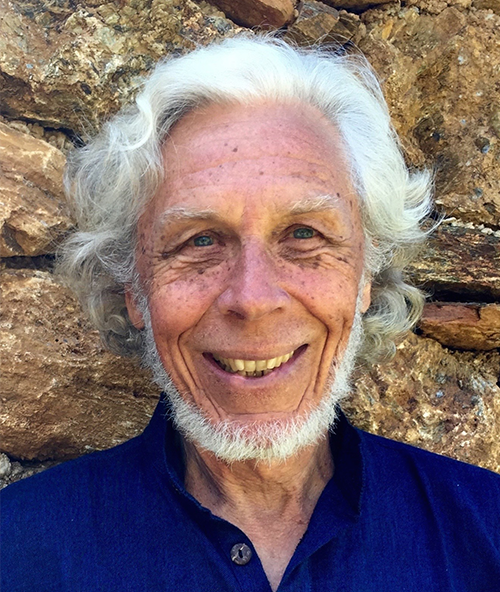
Dr Claudius van Wyk · Holism, Faith & Ethics
As a life-long scholar of holism, Claudius has enjoyed a career in executive coaching and organisational consultation offering strategic transformation facilitation for over 25 years. He applies complexity-theory insights to strategic management and leadership focused on wellness and sustainability. His expertise is applying Holistic Systems Practice to promote engagement and resilience in the dynamic world.
Watch the recording
Recorded Sunday 24 May, 11h30 CEST. The full transcript is available below and as a downloadable PDF.
The full session
Read the transcript
Abstract
The closing public session of Phase 1 — and, in a sense, the destination towards which the whole festival has been moving — Dr Claudius van Wyk's Holism and Ethics takes the threads laid by Kobus Du Pisani, Jeff Blumberg, Marcus Link, Jude Currivan, David Lorimer and Rhett Gayle and weaves them into a single proposition: love is choosing the path of alignment — alignment with life, with wholeness, with the deeper intelligence moving through all things.
Speaking from his home in the mountains of southern Spain at the same ~1000m altitude as Maclear's Beacon on Table Mountain — where Smuts loved to climb and from where he could look across to Riebeek-Kasteel and the childhood mountain of his epiphany — Claudius opens with three dreams in which Smuts visited him: wearing the people's uniform, gathering a coalescing circle of conversation, and being witnessed in a room not large enough to hold what was unfolding. From there he sets out his diagnosis of the ethical crisis of the present, drawing on Alasdair MacIntyre's incommensurability of premises (from After Virtue, 1981) and Smuts' own 1927 warning that "if the soul of our civilisation is to be saved, we shall have to find new and fuller expressions of the great saving unities". He proposes a way of thinking about ethics that goes beyond rules: not deontological, not teleological, but participatory — ethics as participation in the unfolding of wholeness itself.
The talk weaves in the outer and inner dimensions of ethics (echoing David Lorimer's inwardness and Smuts' 1889 invloed-wet, the law of influence), Aristotelian virtue and entelechy, the triad of beauty, truth, and goodness as a hopeful compass (the touchstone Smuts shared with Tolstoy), and the example of an olive tree pruned not by protocol but by sitting with the tree until it reveals its needs — a Goethean act of letting the living being speak. He cites Prof. Marilyn Monk's framing of love as the unconditional service of interconnected parts to the higher-order whole, recognises responsibility as the ability to respond, and closes Smuts' Chapter 12 in his own voice: the great lesson of humility is the ethical message of evolution. The proposition is held throughout: ethics is not merely a system of thought. It is a way of seeing. It's a way of being. It is our way of being instruments of incarnation — daily participation in the unfolding of wholeness, through every action, every relationship, and every choice we make.
A discussion and the launch of the Holos Earth Alliance follow the talk; the transcript continues through to Claudius's closing thanks to the team.
Transcript
Bridge — Michael Stock
Michael Stock: Just a few words from me. Welcome to Claudius, who's going to take us on a short walk outside before our final presentation of the festival. Claudius, as I said before, I don't think for this audience you need any introduction.
The talk — Claudius van Wyk
From the mountain in Spain
Claudius van Wyk: Very beautiful day. This is where we live — we're up at 1,000 metres, above the village of Nahuarón. You might see on the horizon there — that's the Mediterranean. And on a clear day, we are able to see the Atlas Mountains in Morocco. And if you pull it a little bit to the left, you may be able to see Herbert's house, who's in the meeting with us today.
That space you see over there is an outdoor living area that is in development, which has been designed for deep conversation. So it will be an ongoing conversation from this. Fantastic.
I'm going to rush a little bit through the introduction of my background, and then go into looking at the question of ethics — trying to resolve and synthesise what we've heard.
Background — from Smuts to Mandela to the council of elders
So — holism has turned 100, the book. And this year, I turn 80. In 1946, when I was born, Jan Smuts was still Prime Minister. And quite intriguingly, with the visit of the royal family in 1947, my father and mother attended the birthday celebration of Princess Elizabeth — her 21st birthday. My father was a journalist on a newspaper that supported Smuts' government. He would talk about Smuts actually frustrating the opposition, because when the opposition demanded an immediate policy on an issue, he would often say let things develop. He already then knew that he needed to move with process. And so I was introduced to Smuts.
This book here is 100 years old. This is the original version, with some wonderful pencil notes in it by a professor from Oxford University. But I was first introduced to Smuts by this book his son wrote, in 1952 — which was given to my father in 1955 by the editor of the newspaper. I was entranced. I didn't understand holism, but I was entranced by Smuts, the person.
There was a turning point in my life when I had the honour of meeting Nelson Mandela. In that meeting, Nelson Mandela poked myself and a colleague in the chest very firmly when we spoke about economics. He said: we don't know much about the economy. You businessmen must tell us how to run the economy. And then, poking us firmly in the chest, he said — in a way that works for all South Africans. That troubled me. In my mind, at the time, the economy was the economy. It did what it did. The fact that we could convert the economy into something that worked for the whole, for all South Africans, was perplexing. It was a challenging point.
Not many years after he became president, he decided he wanted to introduce an initiative in South Africa called Moral Regeneration. And he appointed one of his cabinet ministers to run that initiative — Jacob Zuma. Who became one of the most corrupt presidents we ever had.
I wrote to Mandela, and I suggested he should form a council of elders — who would be an advisory body that would stand for the highest principles, that would work for all South Africans. He responded very positively. It took many years until he actually instituted the Council of Elders. Richard Branson claims the credit for having suggested the idea. I have the correspondence.
I then, thinking about the problems of a moral South Africa, started studying complexity and emergence, incorporating the science of complexity and emergence into the holistic view. I wrote a paper on it and presented it at a complexity conference. Then I went on with my studies and wrote a dissertation on holism, complexity, applied ethics, and the application of this to the business world. There's my dissertation. It got a first.
Three dreams
Now, something interesting happened. I had three dreams in which Smuts visited me.
In the first dream, he was on a huge horse, looking down at me. And he spoke with a stern voice — in Afrikaans, he said: "Dra die mense se uniform" — wear the people's uniform. I woke up out of the dream and thought: what does that mean? Is this a call for me to mobilise people? It perplexed me.
Then I had a second dream, not long ago. He was youthful, he was looking vigorous. But the gathering around him was dissolving. In the dream, I went and sat next to him, and we started a conversation. And in that conversation, a new gathering started coalescing. People started coming into the conversation. I woke from that dream and I thought — that's what the Holos initiative is about. It's a place for conversation. It's a place for us to explore together, to learn together.
And then I had a third dream very recently, where I was almost disembodied, looking down at a gathering, and Jan Smuts was there, and the gathering was around holism. It was a big gathering. My sense was: this room isn't big enough.
And so that creates a kind of context for this experience we've had in these wonderful days of being together.
A book on holism and ethics
We've had a number of books that have been discussed here. Professor Du Pisani, who's with us, has written an authoritative work on Smuts from the historical and philosophical perspective. Jeff Blumberg has a book about to be published, looking at Smuts' sequel. Marcus Link has a book about to be published — Keystones in the Patterns of Place. And I have had quite an encouraging response to my own unpublished book. So I'm going to give a couple of excerpts around ethics from what that book is about: Holism and Ethics: Love as Choosing the Path of Alignment.
The ethical crisis of our time
In it, I'm trying to address the ethical crisis of our time. We live in an age of extraordinary achievement and profound uncertainty. Humanity has never possessed such scientific power, technological sophistication, or global interconnection. Yet precisely at the same time, we are increasingly unable to agree on a simple question: what is the right thing to do?
Alasdair MacIntyre, the ethicist and philosopher, described this as a condition of an incommensurability of premises. Simply put, we no longer share a common foundation for determining what is right and wrong. And of course, in Rhett's presentation, he addressed this issue of the Fall and the right and wrong, the judgement. We have competing political ideologies. We have religious convictions that divide us. We've got a situation where economic interests outweigh shared values. And our moral certainty tends to create fragments and conflict in our worldviews. The modern international order reflects this tension — shared principles are increasingly displaced by national interest, often disguised as principle, and used for entrenching personal power. We hear of the weakening of a rules-based order; it is widely lamented.
Nearly a century ago, Smuts warned of this. He feared that humanity's rapid scientific and technological progress would far outstrip its ethical maturity. This is a disjoint — between the power of our technology, and our capacity to think how to use it. He said that if our spiritual and moral development stagnated while material power accelerated, civilisation itself would become distorted and stunted.
This is what he wrote in the second edition of Holism and Evolution in 1927:
If the soul of our civilisation is to be saved, we shall have to find new and fuller expressions of the great saving unities — the unity of reality in all its range, the unity of life in all its forms, the unity of ideas throughout human civilisation, and the unity of man's spirit with the mystery of the cosmos in religious faith and aspiration.
The unity of reality in all its range — we heard about that so eloquently yesterday. The unity of life in all its forms. The unity of ideas throughout human civilisation — this reminds me of Marcus's powerful input about the narratives we live by. And the unity of man's spirit with the mystery of the cosmos in religious faith and aspiration — what Rhett has just been talking about.
So his warning feels remarkably contemporary. It was Professor Du Pisani who spoke about hope. We've just spoken about faith, hope and love. Smuts did not simply diagnose the problem. He offered an alternative. Holism. Not holism in the diluted, fashionable sense of simply everything being connected — that Rhett spoke about. But holism as a profound philosophy of reality. One that understands life as an unfolding movement towards greater integration, complexity, inwardness and wholeness. Jeff Blumberg spoke about this so eloquently. And perhaps it is from this deep understanding that a renewed ethics might emerge. I'm calling that Ethics Beyond the Rules.
Phase 1, Phase 2, and what ethics is for
This reflection arises within the Centenary Festival of Holism and Evolution. In Phase 1, we have been looking at Smuts' original vision, placing it in conversation with contemporary science, ecology, cosmology, and consciousness studies. Phase 2 — the liminal space — turns towards embodiment: how these insights might shape the way we live, lead, relate, and act. As Rhett said: towards his wife, his dog, his neighbourhood.
This exploration of ethics stands between the two movements. It gathers what has been explored, and it asks: what does it mean to live holistically? How should we act if the whole truly matters? Jude raised that question yesterday.
Now — ethics is often reduced to rules. What we should or should not do. Philosophers traditionally distinguish between deontological ethics, grounded in duties and principles, and teleological ethics, concerned with consequences and outcomes. But from a holistic perspective, ethics cannot be reduced to either rules or results alone. It must suggest something deeper.
Ethics emerges from our participation in the unfolding of wholeness itself.
The question then becomes not merely is this action permitted? Not only will this action produce good outcomes? But rather: does this contribute to the vitality and coherence of the greater whole? Holistic ethics shifts the focus from isolated actions to the quality of participation. It asks us not simply what we do, but who we are becoming, and why we do it.
Inwardness and ethical consciousness
I'm looking at the question of inwardness that David Lorimer addressed yesterday — and ethical consciousness. For Smuts, ethics has both an outer and an inner dimension. Externally, ethics concerns consequences. Every action ripples outward, affecting communities, institutions, ecosystems, and future generations. Already in his early article Homo Sum, 1889, the young Smuts described this as the law of influence — the most universal of moral laws. We have an impact. We make a difference.
Internally, ethics emerges from what Smuts called inwardness — the quality of awareness, consciousness, and character from which the action arises. This echoes the insight of Aristotle, who argued that virtue is not merely about isolated acts, but about cultivated character. Ethics is less about compliance, and more about disposition. About the person one becomes.
As inwardness deepens, so too inevitably does responsibility. And when I use this word, I'm using it in the sense of the ability to respond. We begin asking different questions. What are the long-term consequences of this action? Who might be affected? Does this contribute to vitality, regeneration, and life? Does it deepen wholeness, or increase fragmentation?
Ethics, in this sense, becomes ecological — not merely in relation to nature, but in relation to consciousness itself. The more deeply we experience ourselves as participants in the living whole, the harder it becomes to act only from narrow self-interest. Behind a shift in ethics resides a shift in awareness.
Beauty, truth, and goodness — a hopeful compass
There are three beautiful principles to look at here. A hopeful compass for holistic ethics lies in that ancient triad that mattered deeply both to Smuts and to Leo Tolstoy: beauty, truth, and goodness. These are not abstract ideals floating above ordinary life. They become living criteria for discernment.
Beauty reveals coherence — moments when parts belong together in harmony. We sense it when something feels integrated, alive, and whole.
Truth asks whether we are seeing clearly. Are we aligned with reality, or trapped in ideology, illusion, fear, or reductionism?
Goodness asks whether our actions nourish life. Do they regenerate and sustain the larger whole?
In practical terms, holistic ethics invites us to pause and ask: Is this true to life? Does this strengthen wholeness? Does this bring greater harmony? What future actions does this make possible? These are not easy questions. But perhaps ethical maturity is not about certainty. Perhaps it is about learning to live more deeply within the questions themselves.
Love as choosing the path of alignment
And so that brings me to the title. Love as choosing the path of alignment. It brings us to the heart of the inquiry.
If ethics is participation in wholeness, then ethical living requires alignment. But alignment with what? Perhaps with life's own regenerative processes — Marcus addressed this so eloquently. Perhaps with the deeper patterns through which existence unfolds — cosmic intelligence. Perhaps with what many traditions have called the way — the path through which life moves towards integration rather than fragmentation. Jude addressed that, the traditions, the Indigenous wisdom.
And perhaps there is another way of understanding love. Mark asked this question only recently. The willingness to act in ways that serve the unfolding of life. The willingness to move beyond ego, fear, and fragmentation, towards participation in something larger than us.
In this sense, love is not merely an emotion or sentiment — Rhett, you've been talking about that. It's not possession, preference, or affection alone. It becomes something far more demanding, and transformative. As the evolutionary biologist and systems thinker Prof. Marilyn Monk beautifully expresses it, love may be understood as the unconditional service of interconnected parts to the higher-order whole — recognising that the well-being of each depends upon the well-being of the larger system.
Seen in this way, love becomes the ethical force. Not soft. Not sentimental. But courageous. A disciplined participation in wholeness.
Ethics as participation
This shift in seeing changes how we see agency. We are not detached observers standing outside reality. We are participants. Aristotle used the word entelechy to describe the movement through which a potential becomes actual. Every moment holds unrealised possibilities, and in every situation, our presence shapes what might emerge.
The question is not whether we participate. The question is — what quality of participation do we bring? What kind of future do our choices enable? (Nnaemeka asked the question about choice.) Do our actions cultivate trust, or fear? Do they generate regeneration, or extraction? Do they contribute to wholeness, or division?
The question applies everywhere. In governance and leadership — we're going to be looking at that very shortly with Dr Glen Martin. Ecology and food systems — we're going to look at that with Klaus Mager. How we steward water and land — we'll look at that with Dr Anthony Turton. In education — we'll look at that with Richard Cox. How we design economies and institutions. And how we engage with technology, including artificial intelligence — we're going to have a marvellous conversation around that. The ethical challenge is no longer abstract. It is immediate, embodied, and deeply relational.
The ethics of relationship
If humanity is one whole, as Marcus affirmed — then ethics is ultimately revealed in relationship. Maybe even companionship, as Jeff suggested. Companionship as moving together purposefully.
How do we see the person in front of us? As a problem to solve? An ideology to resist? A category to pursue? Or do we encounter another human being as a living centre of potentiality for enhancing life's vitality — a potential keystone in the patterns of place, Marcus?
Every relationship creates conditions that either enable or diminish another's unfolding. And this includes our relationship with ourselves. Holistic ethics asks not only how we care for others, but how we cultivate our own being — physically, psychologically, morally, and spiritually. Compassion outward must be matched by compassion inward. Ethics becomes not merely behavioural — it is developmental.
The olive tree
And so I want to give the example of an olive tree. I was sitting outside under a beautiful olive tree. You've sat under that olive tree with us, Michael — as has Joshua, as have others who are here with us.
Let us imagine this image. An olive tree may be pruned for maximum production — treated as a machine for yield. Or it may be tended as a living being — with care for its balance, its vitality, its future flourishing.
We were so impressed by a tree pruner who came to prune our olive trees. He would just sit with the olive tree. He didn't have a protocol of cut this branch, cut this branch. He actually sat with the olive tree. In a Goethean sense, he was letting the olive tree reveal its needs to him. And then he would prune it — lovingly, beautifully, for its long-term flourishing.
And so — inwardly, we need pruning as well. Letting go of what is distorted. Releasing excess. Restoring balance. Aligning ourselves with what allows life to flourish. This is the work of self-knowledge, of honesty — Marcus demonstrated that with the transparency of his own experience, his inspiring presence — of being present. And perhaps, ultimately, that is of love. The ability to make discerning choices is an expression of inner freedom.
Jan Christian Smuts wrote these words: the function of the ideal of freedom is to secure the inner self-determination of the personality. You addressed that, Rhett, to show Jesus as an exemplar of that. But in Chapter 12, he concludes this way:
The great lesson of humility is the ethical message of evolution.
Closing the talk
And so we return to the central proposition: love is choosing the path of alignment. Alignment with life. Alignment with wholeness. Alignment with a deeper intelligence moving through all things, that we've explored so deeply.
In this light, ethics is not merely a system of thought. There was my Master of Philosophy dissertation. Ethics is a way of seeing. It's a way of being. It's our way of being instruments of incarnation. Ethics is thus daily participation in the unfolding of wholeness — through every action, through every relationship, and in every choice we make.
Thank you.
Response and dialogue
Michael Stock: Claudius, would you like me to close, or would you like us to create space for anything else?
Claudius van Wyk: We can have a space — you can facilitate a question and comment space.
Michael Stock: Thank you. So, we have the luxury of time. Would you like to raise a hand?
Rhett — what was in my heart unsaid
Rhett Gayle: Thank you. I don't have a question. Or I have a million questions, but I'm not aware of any of them. I just wanted to say how unbelievably inspiring your talk was, and how grateful I was that you gave it. You said what was in my heart unsaid and unthought and unseen, in the background. And you brought it out and showed it to me, and I was super happy and grateful. Thank you.
John Anderson — the deep-time garden at Pretoria
John Anderson: I just wanted to make a quick comment. He is a really Smutsian character. A holistic character. Amongst other things, he happens to have — in a family community down in the Yellow River area — well, he conducted the marriage of my daughter a quarter of this century ago. These are driven by photonistic evidence.
A question I have: is there a third phase to this festival?
Claudius van Wyk: Yes.
John Anderson: Because it'll continue next year. And that will be in South Africa.
Claudius van Wyk: Yes, that'll be early in the new year. And John is going to be addressing us later in the year — as a palaeobotanist, a holistic palaeobotanist. And John has a wonderful garden that he's created, which shows deep time. So, John, we're looking forward to your presentation later, and to being with you physically. Thank you.
John Anderson: That would be perfect. I would love to take you all around our gardens — a journey through deep time. Our property is two kilometres from Irene, where Jan Smuts lived. Doornkloof, where we live, is in the middle of deep time. The earth, where it stands, is about three billion years old. I'd love to take you all on a journey through deep time. Thanks again, Claudius — a terrific presentation.
Mark van Wyk — beauty, truth, goodness as a felt compass
Michael Stock: The first hand I saw was Mark, I think, and then Nnaemeka. So — Mark.
Mark van Wyk: Thank you. That was a wonderful presentation, really inspiring. I don't have any questions — I just have a couple of comments. Something's actually integrating for me, especially today. Starting with my question that I originally posed to Rhett — I think the deeper question for me, and many of us, is: how do I apply myself in the world to be part of a positive contributor to the greater holistic picture? And then I got caught out as well — this firm moral standpoint causes fragmentation. So it's quite an eye-opener for me to remember that it's a process of having space to allow, and form, and join, and be — what's part of the yeast that makes the bread rise, as opposed to the dictator.
And then, Claudius, you just reminded me — so beautifully spoken — that ethics can't be rules-based, and it can't be outcomes-based. Because the rules and the outcomes are going to be different for all of us, based on our own values. I always try to find: where's the lowest common denominator between all our values, that at least we can use as a base, and then we can hopefully all try and agree. But today I'm learning that it's not about agreeing. It's actually about growing and figuring it out together and listening. It's about participation, which was so beautiful.
And then — how does one decide is this a good thing or a bad thing that I'm doing? And that thing about beauty, truth, and goodness. Like — does this decision give me that beautiful, warm feeling? Truth — do I get clarity from this, or does it feel confusing? Goodness — is this regenerative? Can I see the benefit and feel the benefits around me? Such a lovely, eloquent way of feeling through these things, rather than using a left-brain analytical mind to try to decide whether it's right.
I just wanted to also thank you for bringing it all together, Claudius. The way you brought everybody's bits in, and made it so inviting and so heartwarming and so emotionally moving — and understandable for a layperson like me. Because there were times during those talks where I was like — I'm so glad we're getting reruns of this, because I actually need to pause, like listening to Alan Watts. You have to pause every few seconds and go holy crap — what? I need more time to process. So thank you for bringing it all together in such a beautiful way that I could understand. And for organising all of this, and for having all these wonderful people sharing their love and passion. And Rhett — your entertaining way of presenting your talk had us in stitches half the time. It was just beautiful. Thank you.
Nnaemeka — responsibility as the ability to respond
Michael Stock: Now, Nnaemeka Prince Akano — I'm very sorry if I mispronounce your first name.
Nnaemeka Prince Akano: Thank you, Michael. You've done a beautiful job at it. There's no best way to pronounce it. It's the intention that really matters, and I am grateful for that.
Claudius, I learned a lot, and I'm still learning. Something that stood out for me is your dexterity — or I would say the wisdom — with which you integrate the living present moment into your walk. I felt touched that my comment and question to Rhett on choice was integrated into the paper that you are writing. And the speech given by Marcus Link, Keystones in the Patterns of Place, was also mentioned, as were the contributions of all other speakers. So it spoke a lot to me. And I did glean wisdom hearing you talk about compassion outward must be matched by compassion inward. And finally — that responsibility is the ability to respond. Deep gratitude, Claudius.
Rod Kersh — the caterpillar, the Kingdom of God, and Integrated Neighbourhood Teams
Michael Stock: I see a hand from Rod. Rod, welcome.
Rod Kersh: Hi there. I'm sitting outside, so the sun isn't great. I just wanted to say thank you to everyone, and particularly to Claudius. I'm so moved.
Claudius will wonder why I sent him an email about an hour ago of a caterpillar on a piece of paper that says The Kingdom of God. I was sitting by the lake, and I looked down, and there was a piece of paper that said The Kingdom of God. And then a couple of minutes later, I found a caterpillar crawling up my leg. And then last night, after the talk, I was talking to my wife about her olive tree, which she'd been pruning. It just seemed to be so many synchronous things coming together.
What I wanted to say in particular was — thank you. Those of you living in the UK, who are involved with healthcare, might have heard of something called Integrated Neighbourhood Teams. It's central to this current government's plans for the NHS. I've really struggled with it, because they've taken integration in as much as bringing different people together. They've brought GPs, physiotherapists, social workers, doctors, voluntary sector together. But they've done it without actually explaining the reason for it. The reason, as far as I can understand from this conference, is to look at our patients in an integrated way — not just to see our patients as a whole. So we see the patient from the physical, the psychological, the emotional, the spiritual. That hasn't been articulated. What I'm going to take on from this is that I'm going to be articulating that, because the message hasn't got through. So thank you to everyone, and particularly to Claudius.
Claudius van Wyk: Thank you, Rod. A truly compassionate doctor is Rod Kersh. Thank you.
John Varney — how we show up
Michael Stock: John Varney, welcome.
John Varney: Yes, thank you. Really, I just wanted to say thank you for the whole experience. I've stumbled into this festival almost, it would appear, by accident. And it's a great honour to be with you. That's exemplified, I think, by Claudius's talk. He shows that it matters how we show up. He showed up wholly — complete. It was beautiful to witness your performance — if I may call it that. Your manifestation was beautiful, and I feel very honoured to be here. Thank you very much for the whole experience.
Jeff Blumberg — the son of Smuts
Michael Stock: Jeff.
Jeff Blumberg: Where's Claudius? I'm looking at everybody. Claudius — I need to look at you while I speak. As somebody who, like myself, has studied Smuts for so many years now — I can just say that you are the epitome of the spokesperson for Smuts himself. If Smuts was the son of the veld, you are the son of Smuts. The way you put this across today was so moving, and captured the heart of what Smuts wanted to say.
What you described today was ethical holism. But as I mentioned to you — this was his life, living a life in holism. What you described from an ethical perspective, he used the same language in the Inquiry for a religious life in holism. And you've put so much more into what he wanted to say, and articulated it so beautifully — whether it's an ethical life or a religious life lived in holism. You put it across so beautifully that it's moved me beyond words. I just want to thank you. From the bottom of my heart, for being you. For inviting me into this community of yours. I just love you. I just love you. Thank you.
Claudius van Wyk: Thank you.
Marc Pierson — Akoff, Aristotle, and a model of wholeness
Michael Stock: Mark — and then I think Ion. Mark.
Marc Pierson: Yeah — I'll try to be brief. Claudius, it's great. Claudius spends an hour with us every Friday morning for the last few years, so we're quite well aware of this group. Carrie has participated in this, so there's this parallel thing going on, which is trying to figure out how to help people participate in wholeness — which we call relocalised creativity.
I just want to comment that five, six, seven, eight years ago — I don't know — I read a book where Russ Ackoff was quoting Aristotle. Which is kind of interesting — gets your attention. Russ Ackoff claimed that Aristotle had said that good, beauty, truth, and economy are the necessary and sufficient aspects to model any social system. Now, I don't know Aristotle, obviously, but Ackoff I know pretty well, and when he says sufficient, I take him very seriously. He was an architect first, and to say sufficient isn't a trivial thing.
So I've spent several years playing with that model — with four nodes and twelve edges. And it is sort of my guiding model. To say: how can any group of people, any social system, behave in a way that is whole? It really does come down to the verbs — the relationships — not those aspects. Those are just variables. Those are just measures of how well you're doing. It's the connections between those twelve that you can fairly straightforwardly figure out — when things aren't whole, what you might do differently.
Claudius plays with us every Friday. I love Claudius. I can't imagine anyone not loving Claudius. And Michelle loves Claudius. We've spent two, three, four weeks — I forget — just up the hill from their house. That is my favourite place on the planet. I have been lots of places on this planet, and I would move there if I could. But being an American, I can't.
Anyway — thank you so much, Claudius. And I wanted to thank Rhett for something not many people here might be able to thank him for. I want to thank him — and don't view this as an insult, Rhett — for your particularly American style of locution. I'm berated regularly by my partner and most of my friends on how I act as an American. And you've refined it with none of the awkwardness that I do. You were a distinct American voice, and like Mark Twain, you're really fun to listen to. Enough.
Chris — honouring an elder
Michael Stock: Chris and Ross.
Chris Hoerée: I want to say some words to honour Mark, to honour Claudius, and to invite everybody here to send lots of love to Claudius.
I was kind of amazed, Claudius — for me, you are a person who embodies agape. I think you have been doing that — especially for us in the core group, and for many more people — to help us flourish. And I can say that I think you are one of the very few elders, people in my life that I, in my stubbornness, accepted as a mentor. I want to honour you and thank you. I would wish I could spend more time there with you up the mountain — talking, being together with Michelle and other people, just enjoying, participating in life together. So I hope we take some more time for that in the future. Thank you.
Marcus — what it is to become a good ancestor
Michael Stock: Marcus.
Marcus Link: Yeah — I was in two minds, but it's just come together so beautifully.
I've been reflecting: why was I drawn to you at that dinner table? Why did I just start talking to you when we properly met? I don't know how long ago it is, maybe ten years. When I just started telling you about the edge of the universe. That's the kind of conversation that normally, when I have it — well, either I don't have it, or when I have it, it's the end of it. But in our case, it was the beginning of it. It was a reminder of the beginning of it. The fact that we are walking together, and have been on a real pilgrimage — and a different kind of pilgrimage, of the holistic kind — together.
I've met so many beautiful people, like Kenneth — who we can't see, but whose presence is truly felt through the words he shared. Kenneth brought to my attention what it was that I was looking for in my pilgrimage. And it was that I found in myself this absence of something some people know as elders. Kenneth brought to me the wisdom of the Igbo people he's just referenced. And one of the statements he made in our very short communication is that to be an elder is to become a good ancestor.
That deeply resonated in me. I firstly said — where are my ancestors? I was cross and angry with my culture, that there are no people who function to me as elders and ancestors in a way that makes me want to step into those feet. But as we've walked together, I've found myself increasingly finding what it could mean if I might have the possibility of becoming an elder, if I was to others like you have become to me.
I thank you so very, very deeply from the bottom of my heart — not just for this conference and festival, but for the life that you lead. So that I might become like you — meaning my version of you, meaning an elder to those who gather around me simply because of my age and whatever that may mean. But it's my job first, not theirs. I love you.
Claudius van Wyk: Thank you so much. Thank you so much.
Kenneth — the ground of being
Michael Stock: Thank you. Claudius, I wonder if we might take a minute for everybody just to pause — and if there's anything they are moved to put into the chat as their words at this moment.
Marcus Link: There's something very magical that's happened — because I wanted to bring up the word elder, and I wanted to quote someone who I've got to know through Claudius, called Kenneth. And it turns out that the Zoom user with no name is Kenneth. I would like Kenneth to speak before I do — and maybe I don't have to speak any more.
Kenneth: Thank you, it's very late for me. I'm in Canada — I had to log in through my phone, I've been trying to put my name out there, but I don't know how to do it.
Claudius, as always — a message I dropped on the chat platform — I was kind of rethinking what prayer becomes after listening to your presentation. What is prayer? It's a kind of ethical question, I'm thinking about it. And the response I'm getting is that prayer is something that changes us. It's not actually asking for something. It's actually something that situates us, that makes us present.
At the same time, I was asking — over here in Canada I've been working with a lot of non-profits. What I discovered is this mechanistic strife for change. I had a comment on Rhett's presentation about change, social change — how do we approach it? There's a story I had some time ago. A little boy was stood in the class, and the teacher was asking, John, why did you whistle? And John said, I did not whistle. The whistle whistled itself. As I'm listening to you, I was thinking about that. And I'm beginning to see that there is a ground of being. Holism is all about that.
When I think of participation as you used it, I also begin to think of: who is this that is participating? How are you aware of this self that is participating? Because I see that the whole effort is to get to that ground of being in a way that allows what the sanctity that is there to unfold through us — to become a part of it in a way that — these days, my prayer is: I hope I'm not standing in the way. I just want to be present in a way that allows that ground of being to find its way through me.
And this changes everything for me about social change. It reminds me of the mustard seed. It's about the potential — that being present, I do not need to be in charge of it. I do not need to control it. I just have to be inwardly present. And then I trust that this ground of being knows what it's doing, it will find its way through me.
I've not listened to you for some time, Claudius, and as I listened — this flood, this — you made me a part of that ground. I received so much response to some questions I have been asking on a very deep, personal level. So thank you, thank you so much.
And Marcus, thank you for — when you talk about companionship, when you talk about Claudius, when you talk about the way we are in relationship either decreases or increases the presence of another — it reminds me of love. In Igbo language, if'unanya — which means seeing. To see. It also reminds me of a passage I read in the Bible: may I decrease so that you may increase. In meditation, someone is telling God: may I decrease, so that you may rise. Thank you so much.
Claudius van Wyk: Thank you, Kenneth. We've walked a journey together for some time. And your wisdom has always contributed. Thank you.
Launching the Holos Earth Alliance
Michael Stock: Claudius, we are nearly at the time when I think we close.
Claudius van Wyk: While they're doing that, I'm going to invite you and Joshua to take us through the next chapter — which is the introduction and the invitation.
Michael Stock: Well, I need to take a breath, because it has been an extraordinary experience of five wonderful days. In this first phase, speaking for myself and all of us, deep gratitude to you, Claudius, all our speakers, and to all of us for being here in great company. Special thanks to Mark, who has worked magic with the tech during storms. To all the core team. And profoundly to Michelle, who has enabled so much of this.
The journey of inquiry continues with Phase 2 — the liminal space — and members are joining the newly launched Holos Earth Alliance. Joshua, perhaps you'd say some words about it, because you were there on the table ten years ago.
Joshua — Ahmad and the meeting place
JP Malkin: Thank you, Michael. This has been quite a journey. I'd like to bring someone else who's been part of the journey for me — who both Claudius and Michelle knew — into this conversation. He was a close friend of mine who's no longer with us, but is still on the journey with us. He grew up in Manchester, on a working-class estate. He became a Muslim — he was called Ahmad. Anthony Miles. And he was a deeply spiritual person, who moved in the end to Canada. He wrote a book called The Tao of Wellbeing. His way of engaging with Taoism was summed up in a phrase which always inspired me, which I'll read, if you don't mind. It was about relationship and meeting.
He said:
The meeting place does not exist until you go there. It has no form. And without form, it has no limit. And without limit, it has maximum potential. The meeting place is everywhere. And the meeting place is here — wherever we are in the world.
Everyone who's engaged with us in this festival is invited to become a founder member of an ongoing meeting place — an inquiry into how we can apply holism in our own places, and in relation to the issues that move and inspire us passionately. Whether that is about governance, education, food and soil, agriculture — whatever it's about. The Holos Earth Alliance is going to be, if you like, our collective gift to the present that Smuts has given us all. An ongoing community engaging practically in applying the holistic perspective and practice. The initial element of that is going to be the liminal space.
Have I omitted anything there, Claudius?
Claudius van Wyk: You've done very well. Thank you so much. And I think Mark can show us where to find the link on the website page. While Mark is calling it up — Elena, I see your hand is still up.
Elena — born in the shadow of Riebeek-Kasteel
Elena Komarova-Tagar: Thank you very much for most beautiful alignment! We experienced this within one week with the festival, and a birthday celebration at Riebeek-Kasteel — and today at Pretoria. With visiting it, I would just like to read you one line from Jan Smuts' son in his biography of Smuts. And echoing what Marcus brought us — from that blessed point of being born in the south-west. So, on his father:
Born in the shadow of Riebeek-Kasteel — that mountain buttress rising conspicuously from the plains of Riebeek-West — this boy was himself in years to come to tower like a great mountain above the level plains of humanity.
And yet, on an individual level, it becomes an individual ladder for all of us. To go up to the spiritual world, and to share together. So we are coming again to that cross of moral rose compass we have been talking about during this festival. Thank you.
Claudius van Wyk: Thank you so much. And next year, we'll go and visit that mountain.
Closing benediction — I saw a light when I was young
Michael Stock: Claudius, in the past I've closed these meetings with a cheery see you tomorrow. And certainly I look forward to being with you again, but I would like you to have the last word as we close.
Claudius van Wyk: Mark is just showing us how to get to the page. While Mark sets that up, a final word.
That last picture you saw was of Jan Smuts at the highest peak of Table Mountain — Maclear's Beacon. Interestingly, about the same altitude that I showed you this morning, where we are: just over a thousand metres. He used to love going there, because from there he could look across to the very mountain at Riebeek-Kasteel that Elena spoke about. And that mountain at Riebeek-Kasteel is where he had his childhood epiphany — where his sense of bounded self dissolved into a sense of universal self. Where he felt part of everything. Everything was part of him. He was one with everything, and yet he had a distinct sense of self. It was that experience that he was able to integrate with his spiritual and religious belief. It was that experience that gave him a whole new insight into the person that Jesus represents — what we've been looking at in this time together.
He called it: I saw a light when I was young, and I've followed that light ever since.
And so it is that light that we're wanting to try and create a space where we can find together. That's the intention behind the Holos Earth Alliance. That will be the intention as we explore how we engage with this world through the systems we're going to explore: water; politics as citizens; consumers. What is our stance as we engage with this world that we are in — and that we need to be in, as Rhett so clearly said it?
For me, it's been a very, very deep sense of satisfaction and gratitude that we have come this far. That we've looked at the background, relative to our deepest knowledge from a scientific and metaphysical perspective today. And that we will take a step forward into the unknown — letting our presence, of who we are, unfold into that unknown so that we shape it.
I'm deeply grateful for those who have chosen to walk this path with us. You are so welcome. Your presence is so assuring. And your encompassment of us in this time together. Your tolerance for our little glitches — for not being able to get in at the time you might have wanted to, when our time has been stretched a bit — deep gratitude for that.
And thank you for joining us on this journey. Thank you to the team — Michael, Egon, Joshua, Chris, Marcus, and Mark, and Tarryn, and Michelle — who have just helped to let this all happen.
My deep gratitude. Thank you. Goodbye for now.
© 2026 Claudius van Wyk. All rights reserved.